Namaz, floor sitting and daily life with a prosthetic leg
Most prosthetic legs are designed for chairs, shoes and dry floors. Life in Pakistan asks for more. Here is how people manage prayer, wudu, floor sitting, toilets, stairs, the monsoon and the heat, and what we can build into your leg to help.
- Free first assessment
- Test socket before the final leg
- Call or WhatsApp 24/7
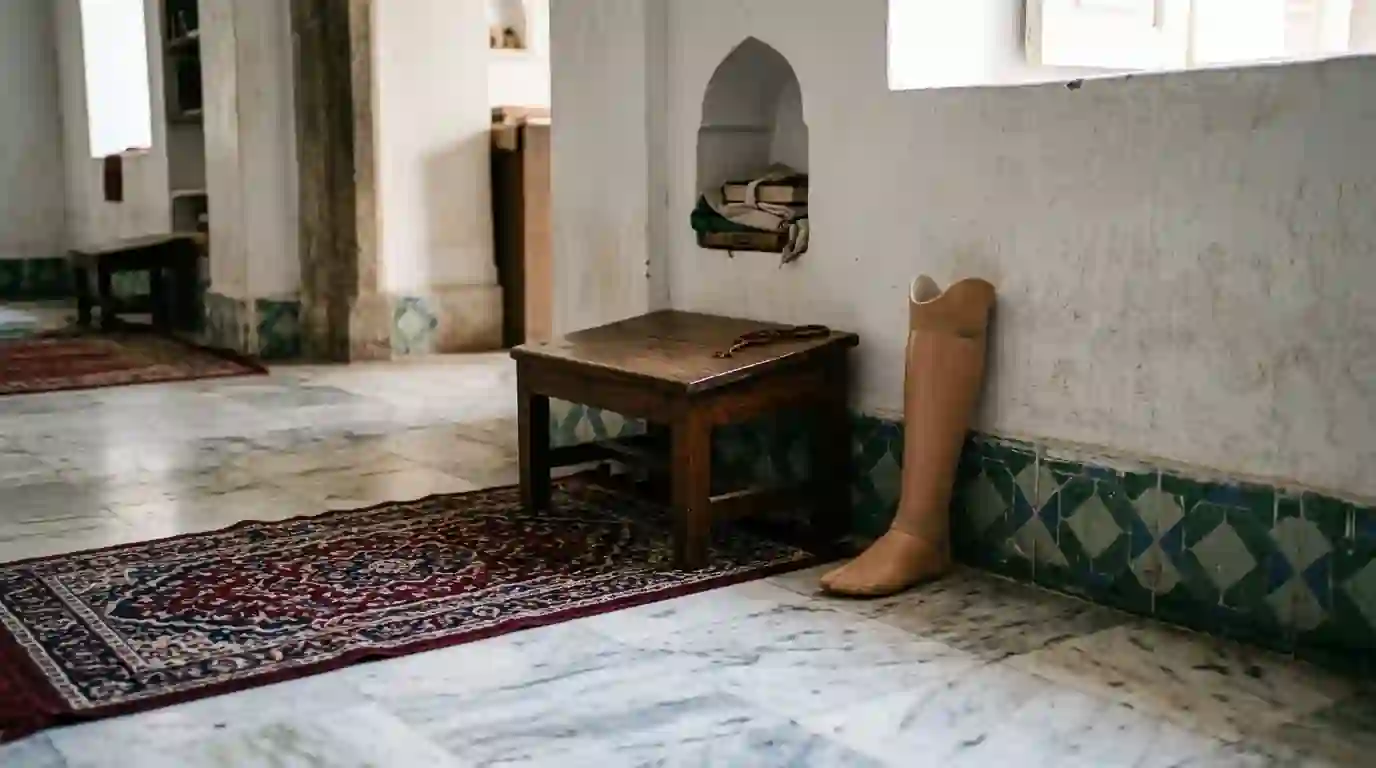
Namaz
Prayer is the question families ask us most. There is no single answer, because it depends on your level and your strength, but these are the common ways:
- Standing with the leg on, then using a low chair or stool for ruku and sajda. This is the most common way for above-knee users.
- Kneeling with the leg on. Possible for many below-knee users with the right socket trim, a soft knee pad and a foot that bends at the toes.
- Seated prayer, with or without the leg, when standing or kneeling is not possible.
Tell us how you pray at the assessment. A few millimetres of socket shape and the right foot can make kneeling comfortable. For the religious question of what is allowed in your situation, ask a scholar you trust.
Wudu and bathing
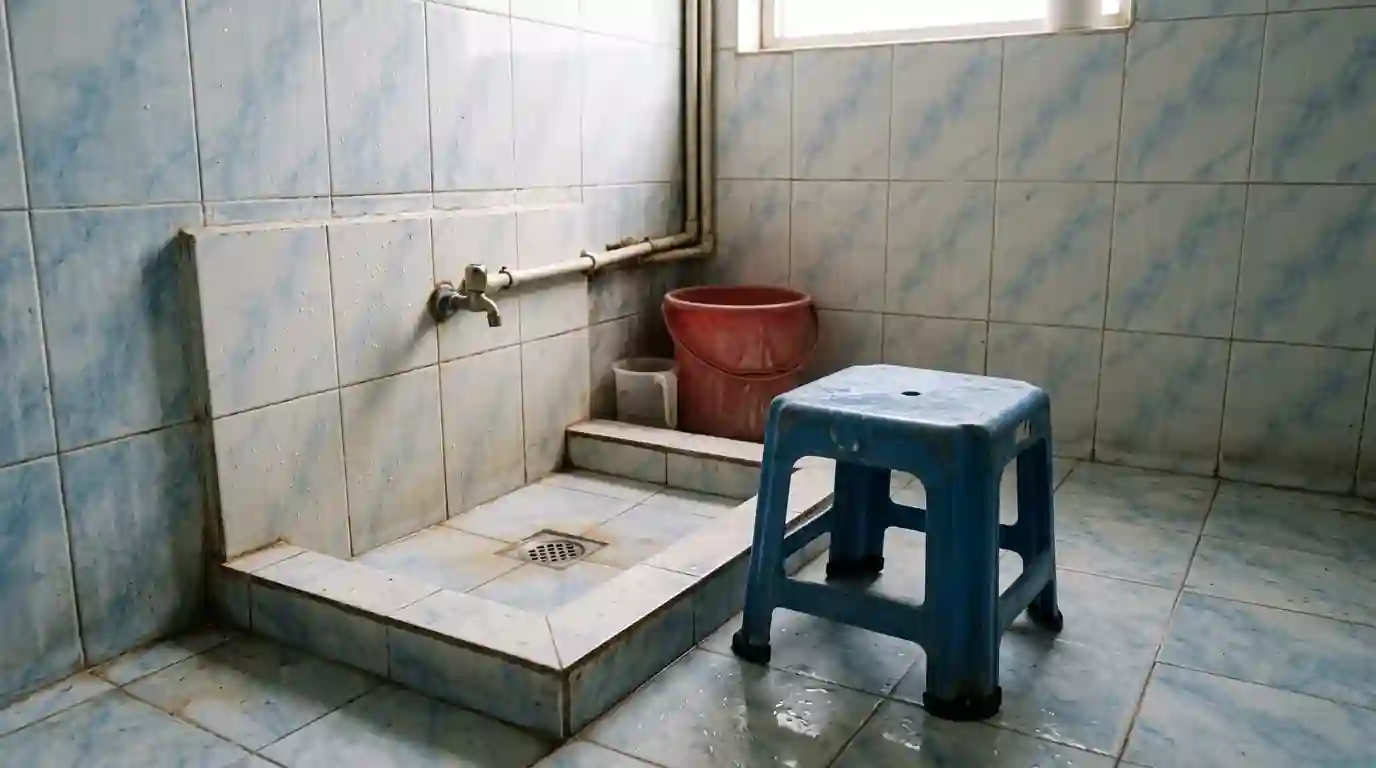
Water and most prosthetic legs do not mix: adapters can rust, some feet and knees are damaged by water, and a wet liner rubs. The usual ways are:
- Take the leg off and sit. A plastic stool at the right height makes wudu and bathing safe and easy.
- Waterproof parts. Some feet, pylons and knees are fully waterproof, so the leg can stay on for wudu.
- A shower leg. A simple, waterproof second leg for the bathroom, so you are not hopping on a wet floor.
Dry the stump, the liner and the leg fully afterwards. Damp skin inside a socket in Karachi's humidity is the start of most rashes.
At home
A safer bathroom
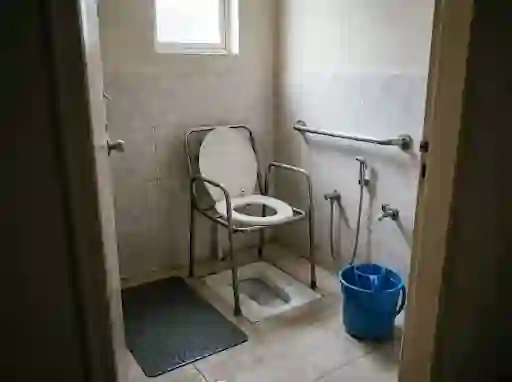
A commode chair over the squatting pan, a grab rail and a non-slip mat prevent most bathroom falls.
Older patients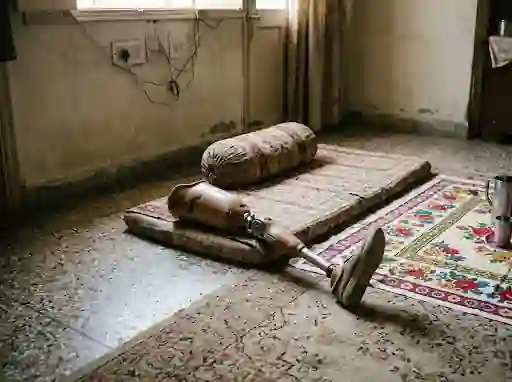
Sitting on the floor
Most people take the leg off to sit on the floor. A knee rotator can help above-knee users sit cross-legged.
Knee joints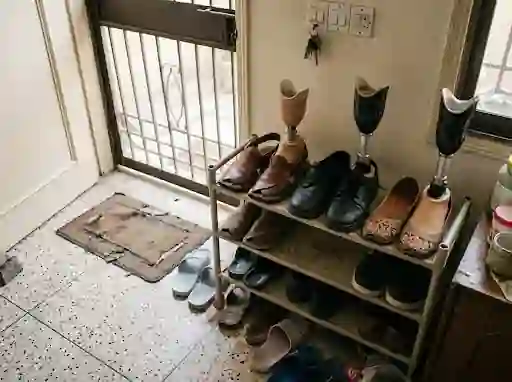
Shoes, sandals and khussa
The leg is set for one heel height. Tell us the shoes you wear most.
Prosthetic feet
Heat and sweat
Wash the liner every day, keep spare socks and dry the skin before putting the leg back on.
Liners and sockets
Out and about
- Stairs. Hold the rail. Up with the sound leg first, down with the prosthetic leg first.
- Broken pavements and slopes. Shorter steps, look a few metres ahead, and use a stick outdoors until you feel steady.
- Rickshaws and cars. Sit first, then bring the legs in. Above-knee users often swing the prosthetic leg in with their hands.
- Monsoon. Avoid standing water where you cannot see the ground, wear shoes with grip, and dry the leg fully if it gets wet.
- Weddings and long events. Long standing tires the stump. Sit when you can, and carry a spare sock.

Small changes that help at home
- A clear path at nightFrom the bed to the bathroom, with a small light, for when you go without the leg.
- Rails where you need themBeside the toilet, in the shower and on the stairs.
- A stool for wudu and bathingThe right height, with non-slip feet.
- A cool place for the linerOut of direct sun, so it dries and lasts longer.

Daily life questions
Can I pray with my prosthetic leg on?
Yes. Many people pray standing with the leg on and sit on a low chair or stool for ruku and sajda. Some can kneel with the right knee and foot set-up. Islam allows prayer seated when standing or prostrating is difficult; if you are unsure what is right for you, ask a scholar you trust.
How do I do wudu with a prosthetic leg?
Most people sit on a stool and take the leg off, or keep it on if it has waterproof parts. Washing the stump and the sound foot is easiest seated. A simple waterproof shower leg is useful if you want to stand in the bathroom.
Can I use a squatting toilet?
Squatting is difficult with most prosthetic legs, and risky above the knee. A commode chair or a raised seat over the squatting pan, or a Western toilet, is much safer. Many families add one when the patient comes home.
What should I do in the monsoon?
Keep the leg dry unless its parts are waterproof, wear shoes with grip, avoid standing water where you cannot see the ground, and dry the leg and liner fully if they get wet.
Can I wear shalwar kameez and sandals?
Yes. A shalwar hides most legs completely. Many feet suit sandals and khussa, though the leg is set for one heel height, so tell us the shoes you wear most.
Read next
Not sure this is the right leg for you?
Send a photo of the stump and a line about your health on WhatsApp. We will tell you honestly what fits, and what it is likely to cost, before you travel or pay anything.