Knee and hip disarticulation prosthesis in Karachi
An amputation through the knee joint or at the hip needs a socket designed for that level, not an ordinary leg made longer or shorter. We make both, and we tell you plainly how much walking each one usually allows.
- Free first assessment
- Test socket before the final leg
- Call or WhatsApp 24/7
Through the knee: a long limb with special needs
In a knee disarticulation the surgeon removes the leg at the knee joint, leaving the whole thigh bone. The end of the bone is broad and often strong enough to take your weight, which many people find more comfortable than the sitting-bone support of an above-knee socket. The long bone also gives you good control of the leg.
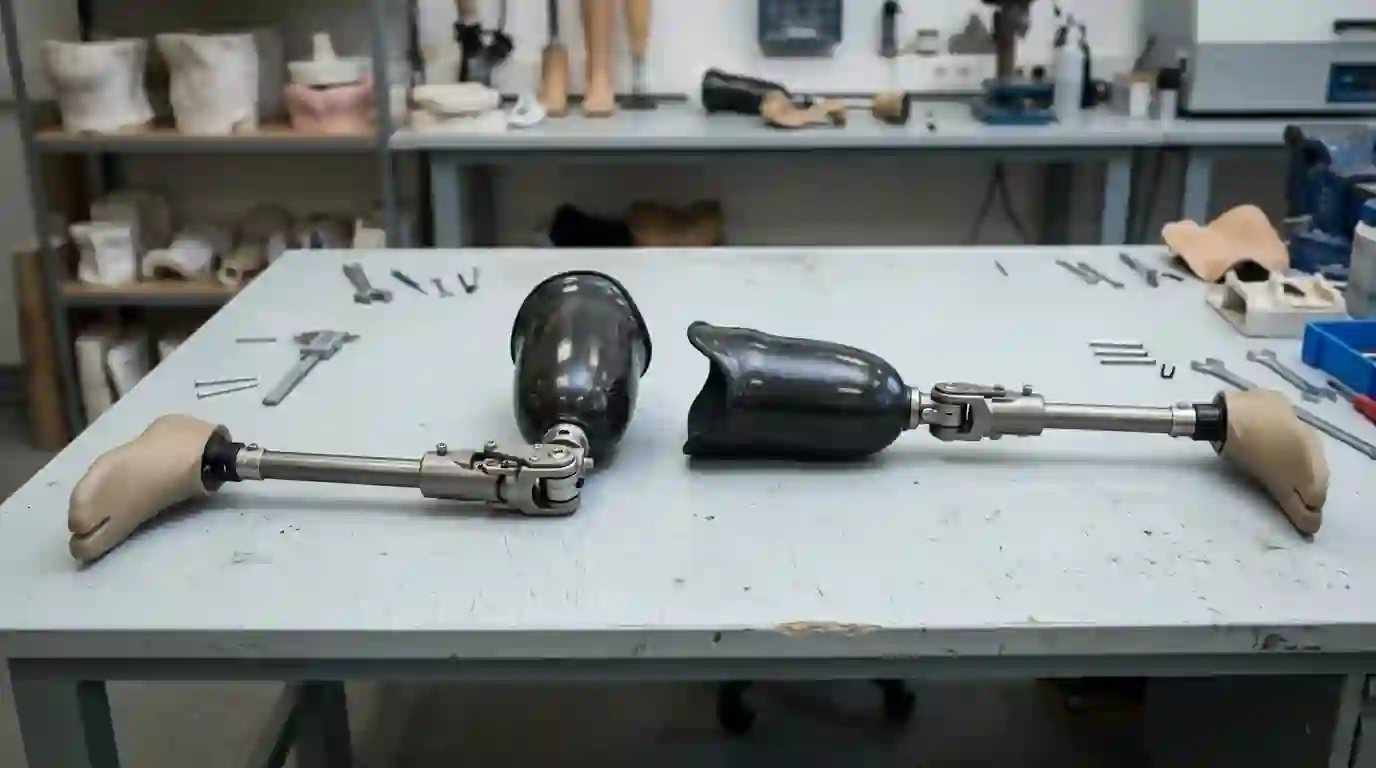
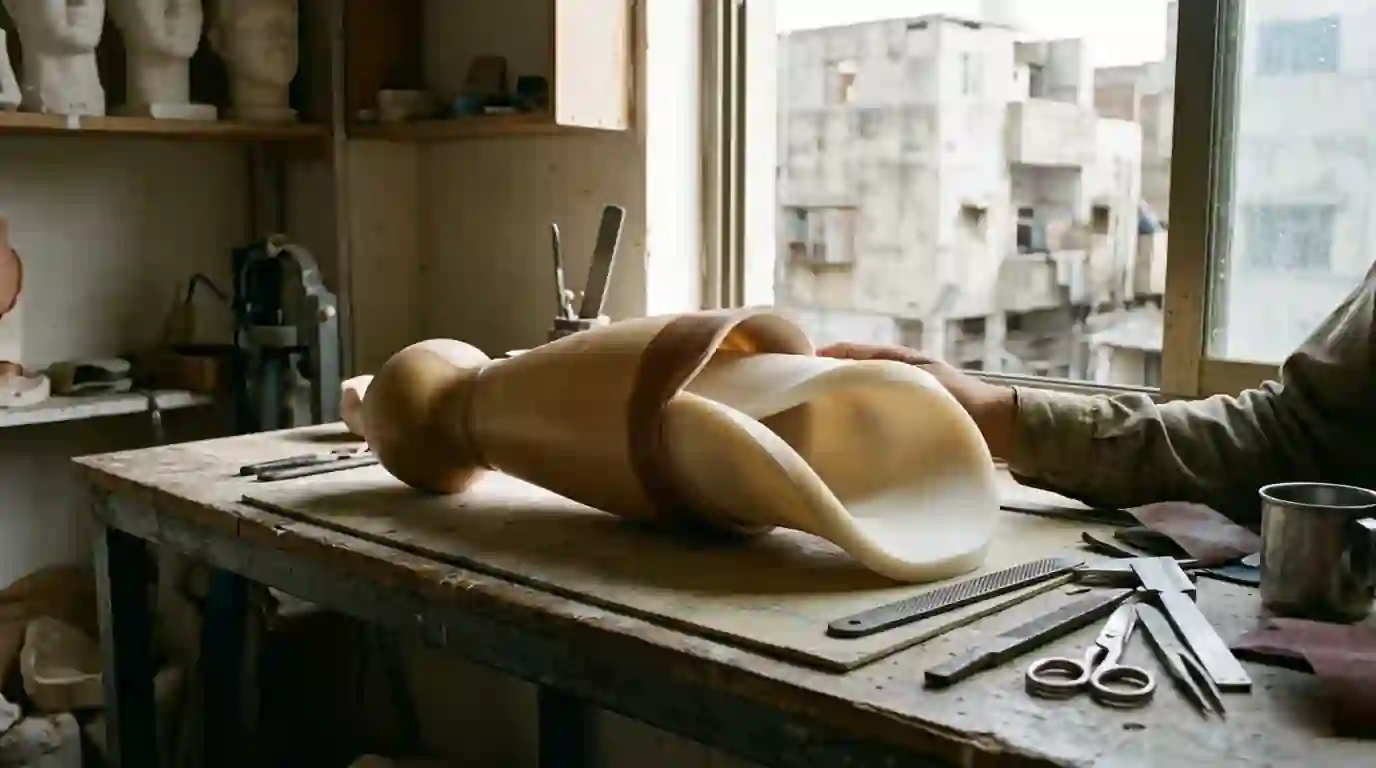
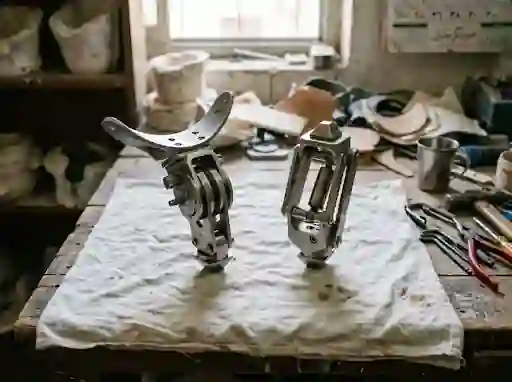
Two things make it different to fit. The bulb-shaped end means the socket needs a way to get past the widest part, usually a flexible inner liner or a window. And because the thigh is full length, there is little room for the knee joint, so we use low-profile polycentric knees designed for long limbs. Even so, the prosthetic knee sits slightly lower than your own, which you notice mainly when sitting.
At the hip: a socket around the pelvis
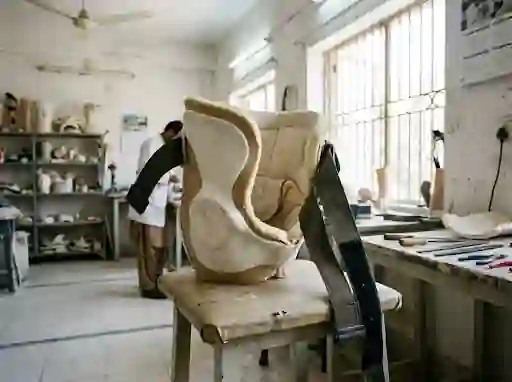
A hip disarticulation removes the whole leg at the hip joint. A hemipelvectomy also removes part of the pelvis. For both, the socket is a moulded shell or basket that wraps around the pelvis and carries your weight on the sitting bone and the soft tissue around it. The leg below has three joints: a hip joint at the front of the socket, a knee and a foot.
The leg is set up so that it stays straight when you stand on it, without you having to hold it. You swing it forward by tilting the pelvis. It takes practice, and it is slower than walking on a below-knee leg, but it gives many people their independence back at home.
Prices for both levels
| Level and band | Range | What is usually inside |
|---|---|---|
| Through the knee, affordable | Rs 170,000 to 320,000 | End-bearing socket, polycentric knee for long limbs, local foot |
| Through the knee, mid range | Rs 320,000 to 750,000 | Low-profile polycentric knee, imported foot, liner with seal |
| Through the knee, premium | Rs 750,000 to 2,500,000+ | Hydraulic knee for long limbs, carbon foot, carbon socket |
| Hip, affordable | Rs 300,000 to 600,000 | Moulded pelvic socket, locking hip, stable knee, local foot |
| Hip, mid range | Rs 600,000 to 1,200,000 | Free-swinging hip joint, polycentric knee, imported foot |
| Hip, premium | Rs 1,200,000 to 3,500,000+ | Hydraulic hip and knee, carbon foot, lighter frame |
Ranges for the complete leg with fitting and training. Your price is fixed after the free assessment.
Parts that matter most at these levels
How fitting works at these levels
- 1
Assessment
We check the healing, the shape of the limb end or the pelvis, your balance and your general fitness.
- 2
Cast
A cast of the limb end, or of the pelvis taken while you lie or stand, with marks over the bones that carry weight.
- 3
Test socket
A clear socket so we can see exactly where your weight sits, and adjust before the final one is made.
- 4
Alignment
The joints are set so the leg stays straight under you. For hip legs this takes longer and is done in small steps.
- 5
Training
Balance, stepping, turning and sitting down safely, over more sessions than a below-knee leg needs.
Questions about these levels
Is a knee disarticulation better than an above-knee amputation?
For walking, often yes. The long thigh bone gives good leverage, and many people can take weight on the end of the limb. The trade-off is that the prosthetic knee sits a little lower than the other knee, which shows when you sit.
Can someone with a hip disarticulation really walk?
Yes, with the right socket and patience. Walking is slower and uses a lot of energy, and most people use a stick or crutches outdoors. Younger, fit patients do best. Many older patients use the leg indoors and a wheelchair for distance, which is a sensible mix.
Why does a hip prosthesis cost so much more?
It has three joints instead of one or two: a hip joint, a knee and an ankle or foot, plus a large moulded socket around the pelvis. Each joint adds cost, and the socket takes longer to make and adjust.
How do I sit with a hip disarticulation prosthesis?
The hip joint unlocks or bends so you can sit. Most people find a firm chair easier than a low sofa. Floor sitting is usually done with the prosthesis off.
Read next
Not sure this is the right leg for you?
Send a photo of the stump and a line about your health on WhatsApp. We will tell you honestly what fits, and what it is likely to cost, before you travel or pay anything.