Below-knee prosthetic leg in Karachi
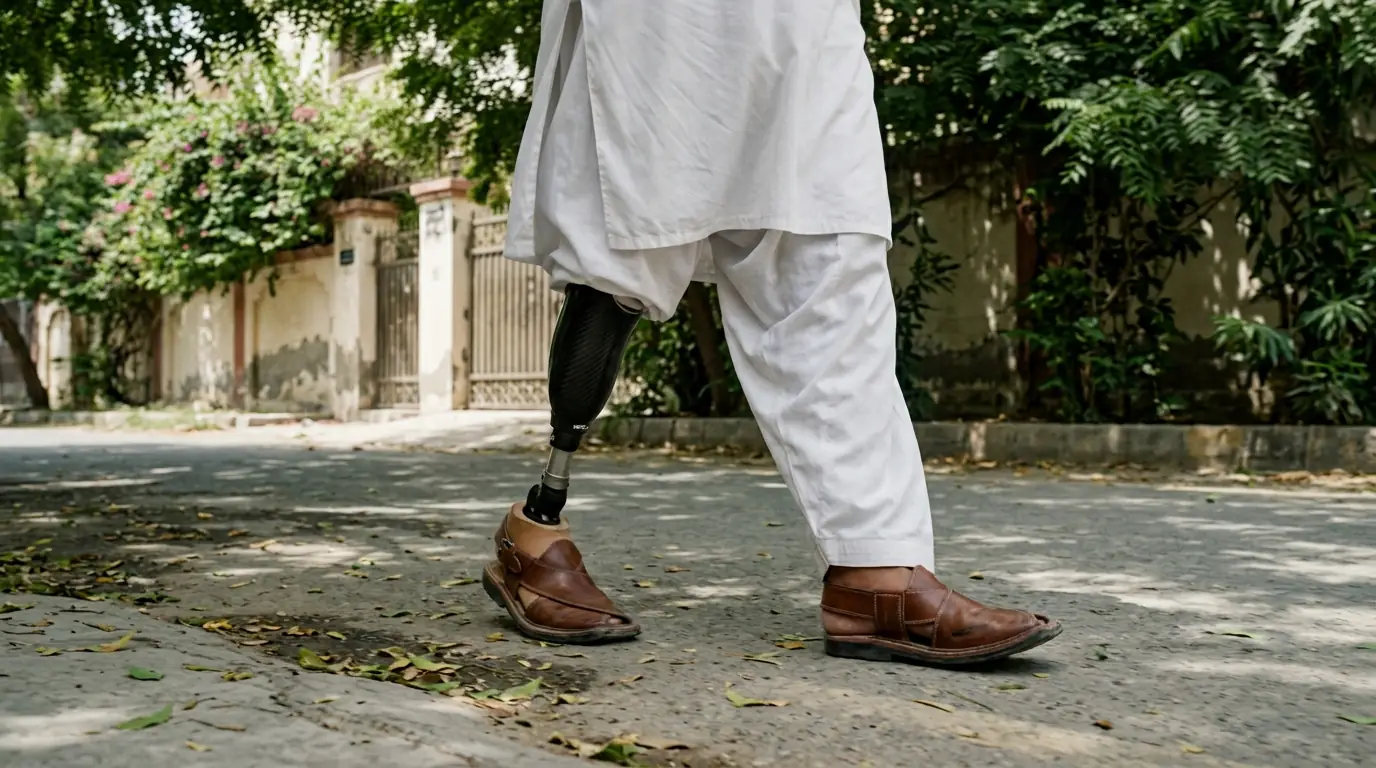
A below-knee leg is the leg we make most often, and the quickest one to learn. Your own knee does the bending, so with a socket that truly fits, most people walk with a stick within a few weeks and many put the stick away later.
- Free first assessment
- Test socket before the final leg
- Call or WhatsApp 24/7
What a below-knee leg is
A below-knee, or transtibial, prosthesis replaces the lower leg and foot when the amputation is between the knee and the ankle. Because you keep your own knee, you keep the joint that does most of the hard work in walking, getting up from a chair and climbing stairs. That is why people at this level usually walk more naturally, and with less effort, than people who have lost the knee as well.
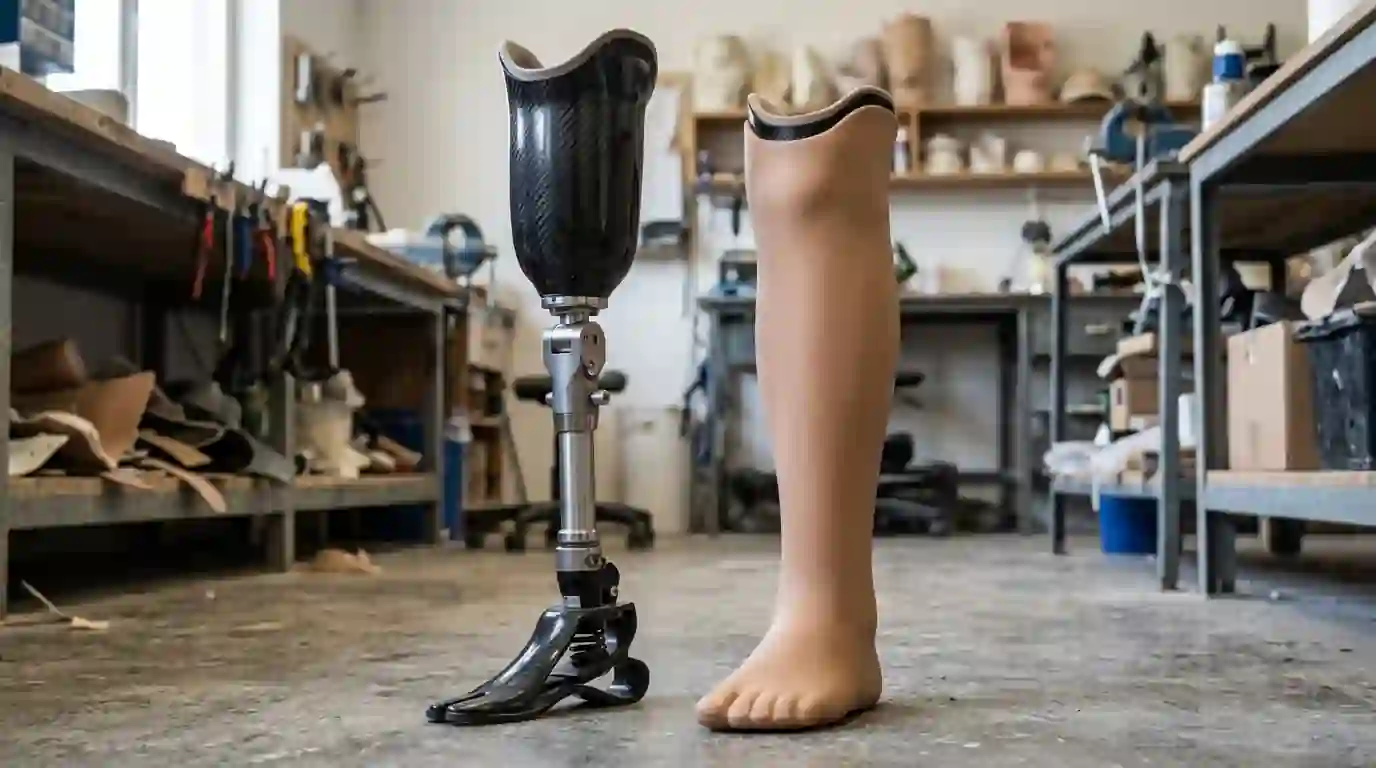
Every below-knee leg has the same five parts: a socket that holds the stump, a liner or socks between the skin and the socket, a way of keeping the leg on called the suspension, a pylon that sets the height, and a foot. The foot and the suspension decide most of the price. The socket decides whether you can wear the leg all day.
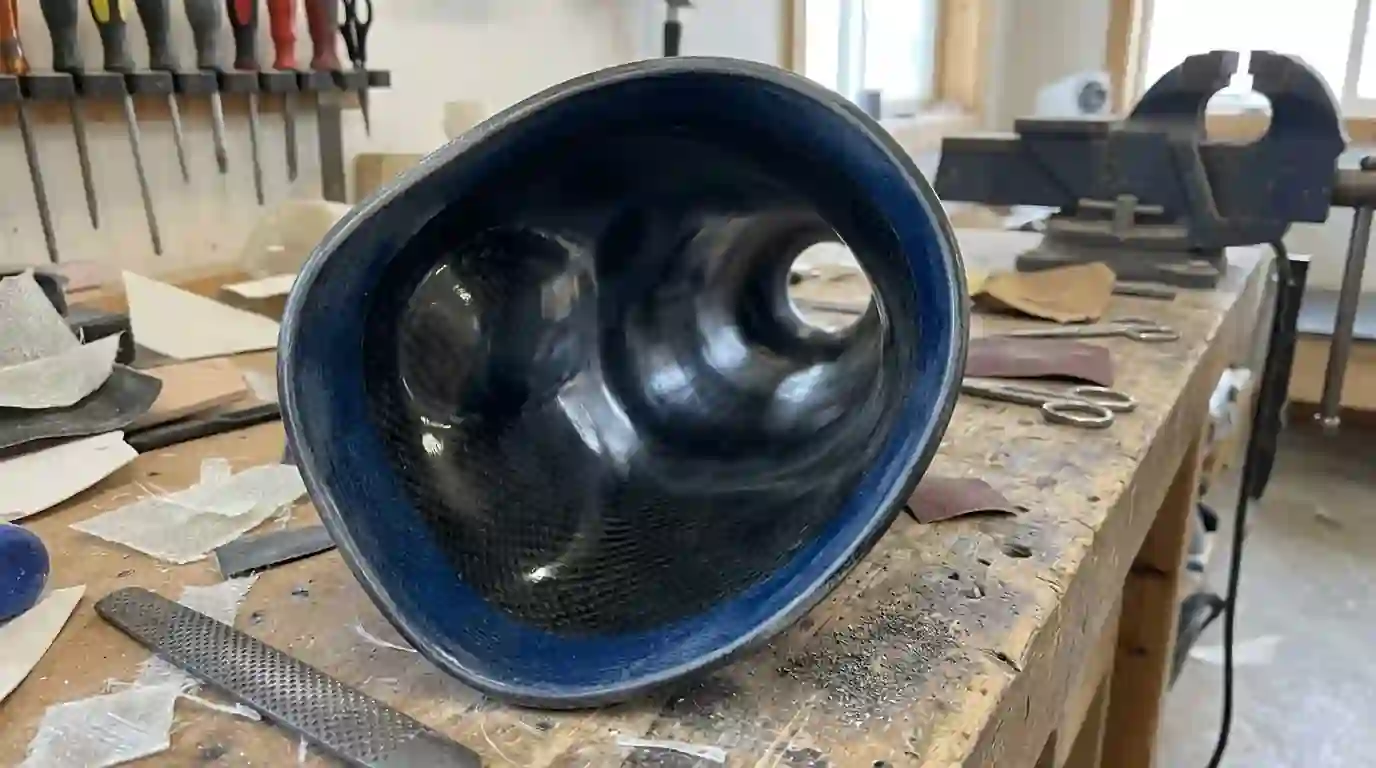
Below-knee leg prices
Prices are for the complete leg, with fitting and walking training. Your own price is fixed after the free assessment.
| Price band | Range | What is usually inside | Suits |
|---|---|---|---|
| Affordable | Rs 80,000 to 150,000 | Laminated socket on your cast, locally made foot, strap or sleeve suspension | Walking at home and around the neighbourhood |
| Mid range | Rs 150,000 to 350,000 | Silicone liner with pin or seal, imported dynamic foot, lighter pylon | Daily work, travel and longer walks |
| Premium imported | Rs 350,000 to 900,000+ | Carbon socket, carbon energy-return foot, seal-in or vacuum suspension | Active users on their feet all day |
For every level side by side, see the prosthetic leg price guide.
The socket, and how the leg stays on
Most below-knee sockets we make are total surface bearing: the socket touches the whole stump and spreads the weight evenly, usually with a silicone liner. For some stumps, especially short or very bony ones, a patellar tendon bearing shape works better, with more weight taken just below the kneecap. We decide this from your cast and from the clear test socket, not from a catalogue.
There are four common ways to keep the leg on:
- Strap or cuff above the knee, simple, cheap and easy to fix, but it can rub in the heat.
- Suspension sleeve, a rubber or gel sleeve that rolls over the knee and seals the leg on.
- Pin lock liner, a silicone liner with a pin at the end that clicks into the socket. Easy to put on, good for most people.
- Seal-in or vacuum, the tightest hold and the least movement inside the socket, for active users with a steady stump size.
In the first months the stump shrinks. You will add thin socks, called plies, to keep the fit snug. That is normal, and we show you how.
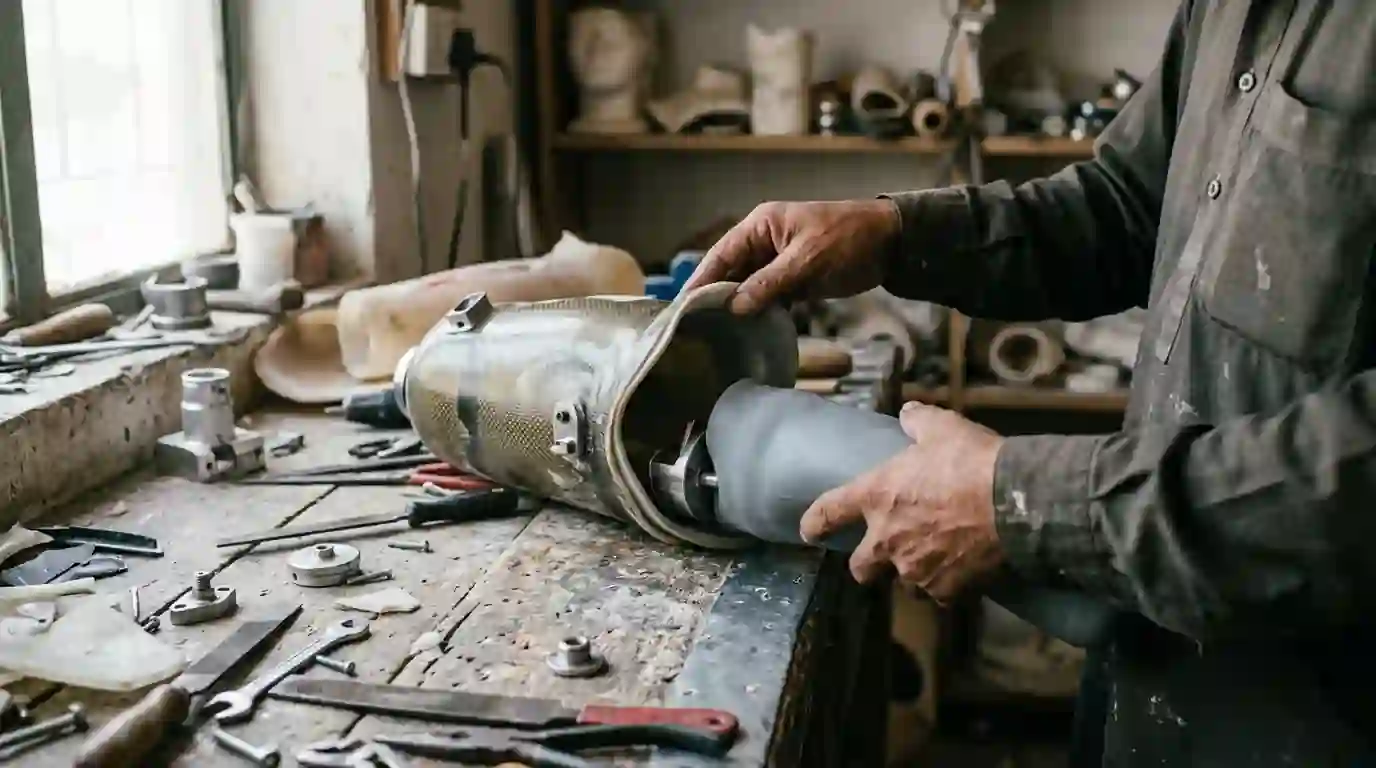
Feet and liners for below-knee legs
The two parts people ask about most. Each has its own page with the options compared.
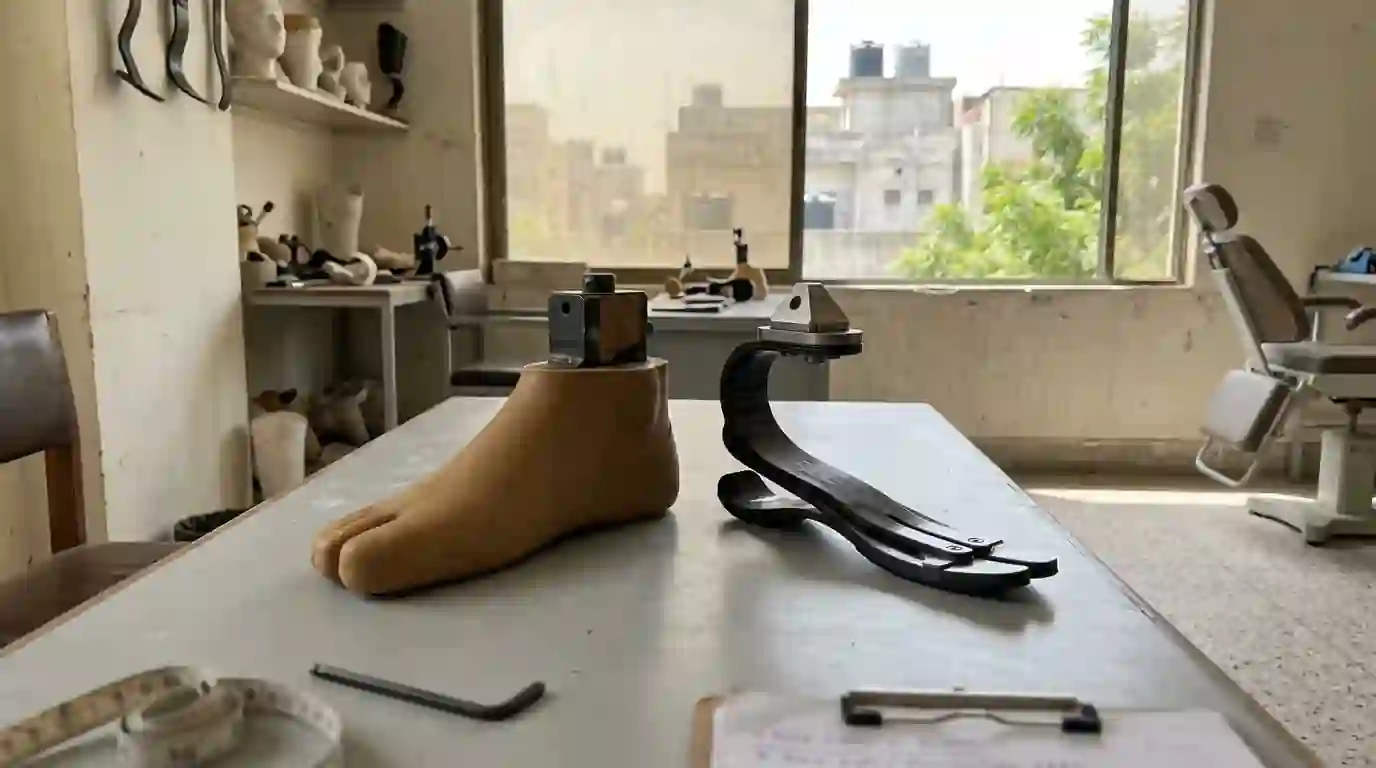
Choosing the foot
A solid SACH foot is tough and cheap. A dynamic carbon foot gives a springier, less tiring step. Most people choose by how far they walk each day.
Compare prosthetic feet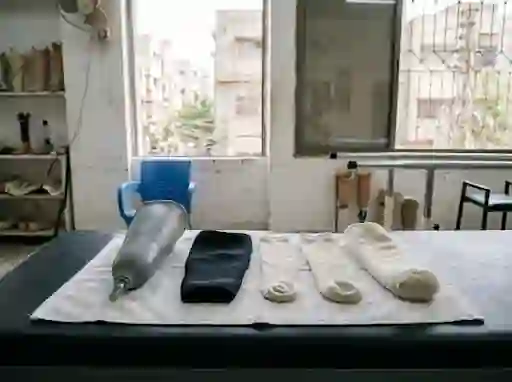
Liners and suspension
Liners cushion the skin and hold the leg on. The right one depends on your skin, your stump shape and Karachi heat.
Compare liners and suspension
How we make your below-knee leg
- 1
Free assessment
We check the healing, the skin, the knee's movement and strength, and your other leg, then agree the leg and the price.
- 2
Cast or scan
A plaster cast of the stump, taken with your knee slightly bent, plus measurements of length and width.
- 3
Clear test socket
You stand and walk in a clear socket. We mark where it presses and correct the shape.
- 4
Final socket and assembly
The real socket is made, then the pylon and foot are lined up for your height and the way you stand.
- 5
Fitting and training
Alignment while you walk between the bars, then training sessions and check-ups as the stump settles.
What helps a below-knee fitting go well
- A fully healed woundNo open areas or scabs. Casting too early can break the skin down again.
- A straight kneeIf the knee stays bent for weeks after surgery it can stiffen. Lying flat and daily stretches help keep it straight.
- Steady blood sugarAfter a diabetic amputation, good sugar control helps the skin cope with the socket.
- Care for the other footThe other foot now does extra work. Good shoes and daily checks protect it.
Below-knee leg questions
How long does a below-knee prosthetic leg last?
The parts usually last three to five years with normal use, and longer with care. The socket is different: the stump keeps changing shape, so many people need a new socket within the first year and then every few years after that.
Can I walk without a stick on a below-knee leg?
Many people can, once the socket fits well and the muscles around the hip and knee are strong again. Older patients and people with a weak other leg often keep a stick outdoors for safety, and that is a sensible choice, not a failure.
Is a below-knee leg painful to wear?
It should not be. Some tiredness and pressure in the first weeks is normal while the skin toughens. Sharp pain, a red mark that does not fade within half an hour, or any broken skin means the socket needs changing. Come back and we will adjust it.
Can I ride a motorcycle or drive with a below-knee leg?
Many below-knee users ride and drive again. If the right leg is the amputated one, a car may need hand controls or a left-foot accelerator. Ask your doctor and check the rules on your licence before you go back on the road.
What is the cheapest below-knee leg you make?
A complete affordable leg starts from Rs 80,000 with a socket made on your cast, a locally made foot and simple strap or sleeve suspension. It is a sound leg for walking at home and around the neighbourhood.
Read next
Not sure this is the right leg for you?
Send a photo of the stump and a line about your health on WhatsApp. We will tell you honestly what fits, and what it is likely to cost, before you travel or pay anything.