Sockets, liners and suspension
If the socket is wrong, nothing else about the leg matters, because you will not wear it. We make every socket on your own cast, try it first as a clear test socket, and choose a liner and suspension that suit your skin and Karachi's heat.
- Free first assessment
- Test socket before the final leg
- Call or WhatsApp 24/7
The socket is the leg
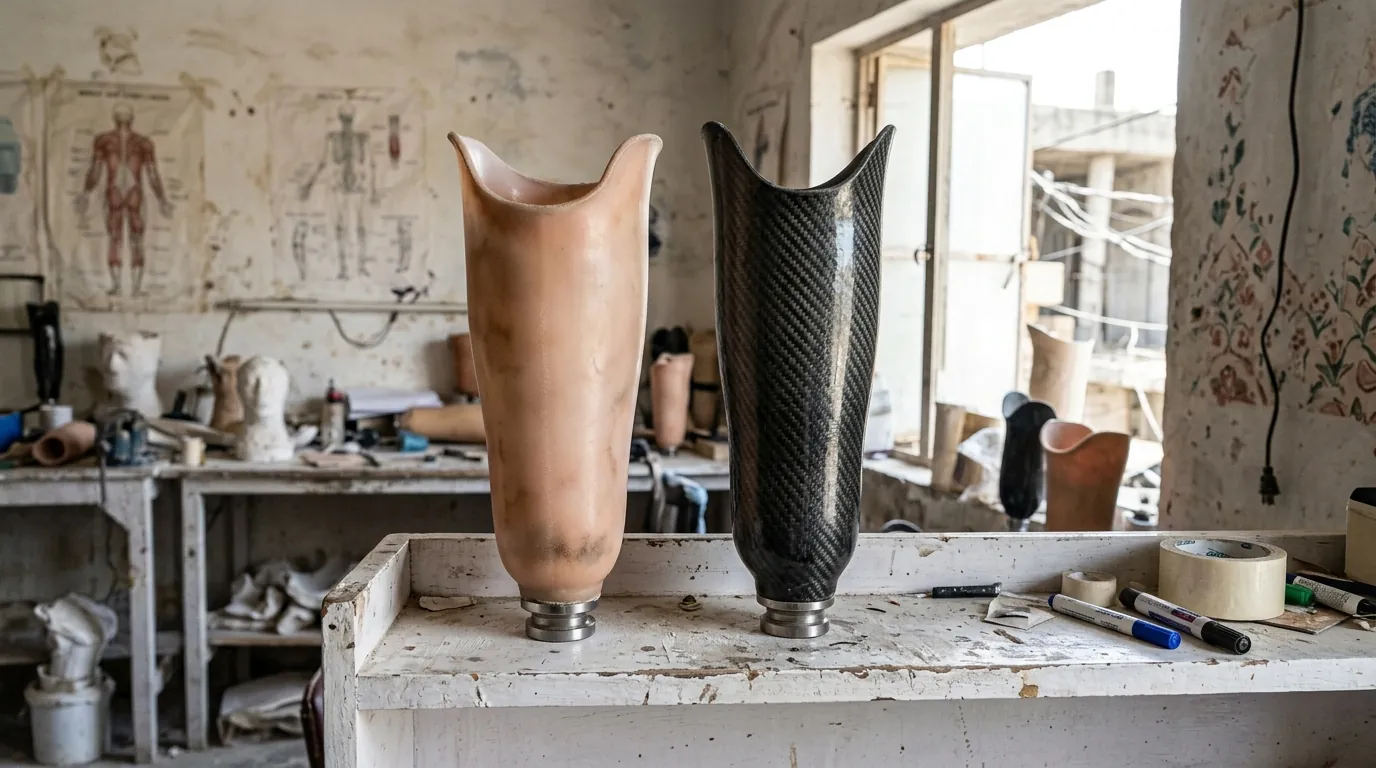
The socket is the shell that holds your stump. All your weight goes through it with every step, so its shape decides where the pressure goes. Some parts of the stump can take weight well, such as the tendon below the kneecap or the soft tissue of the calf. Others, like the end of the shin bone or a scar, cannot. A good socket loads the right places and spares the wrong ones.
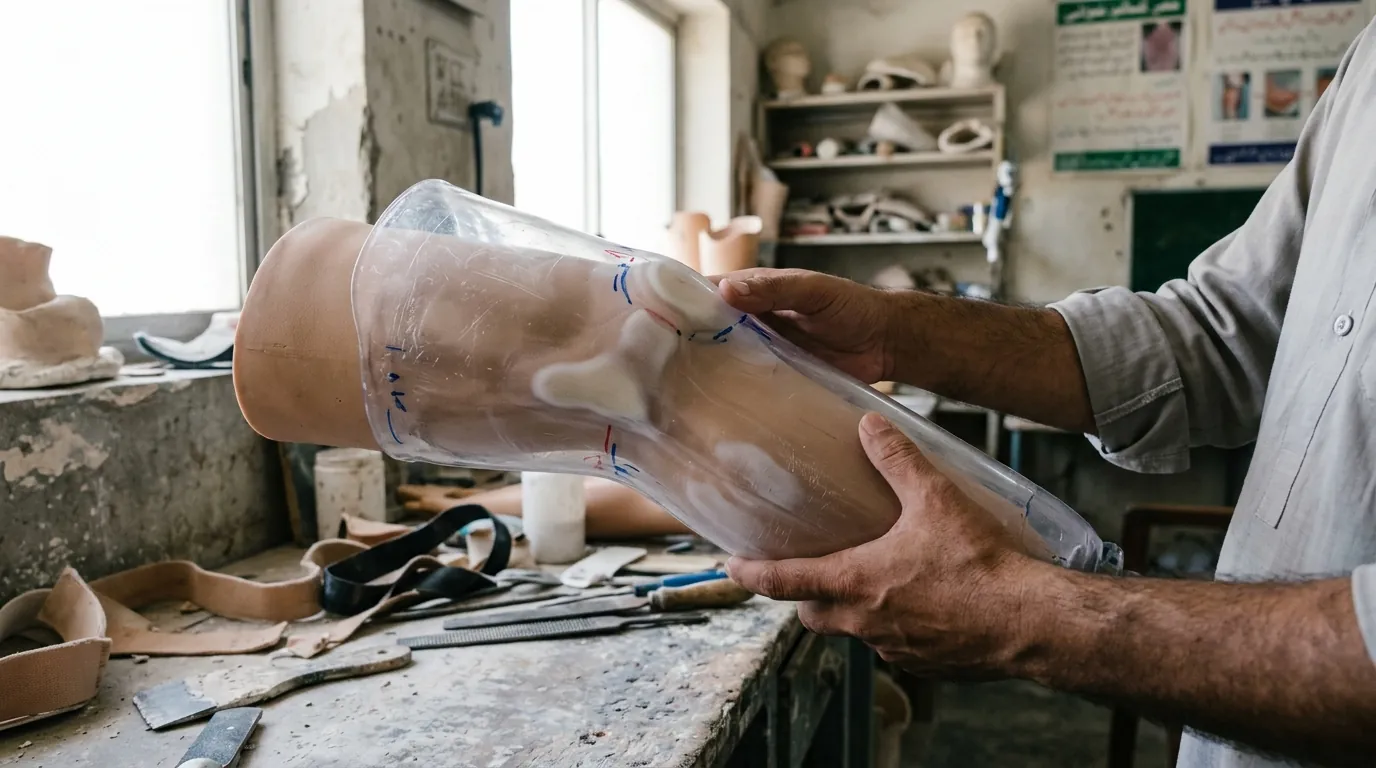
There is no way to get this right from measurements alone. That is why every socket we make starts as a plaster cast of your own stump, then a clear test socket that you stand and walk in, before the final socket is laminated in resin and carbon or made in thermoplastic.
Liners and socks
Between your skin and the socket sits either a liner or stump socks, often both.
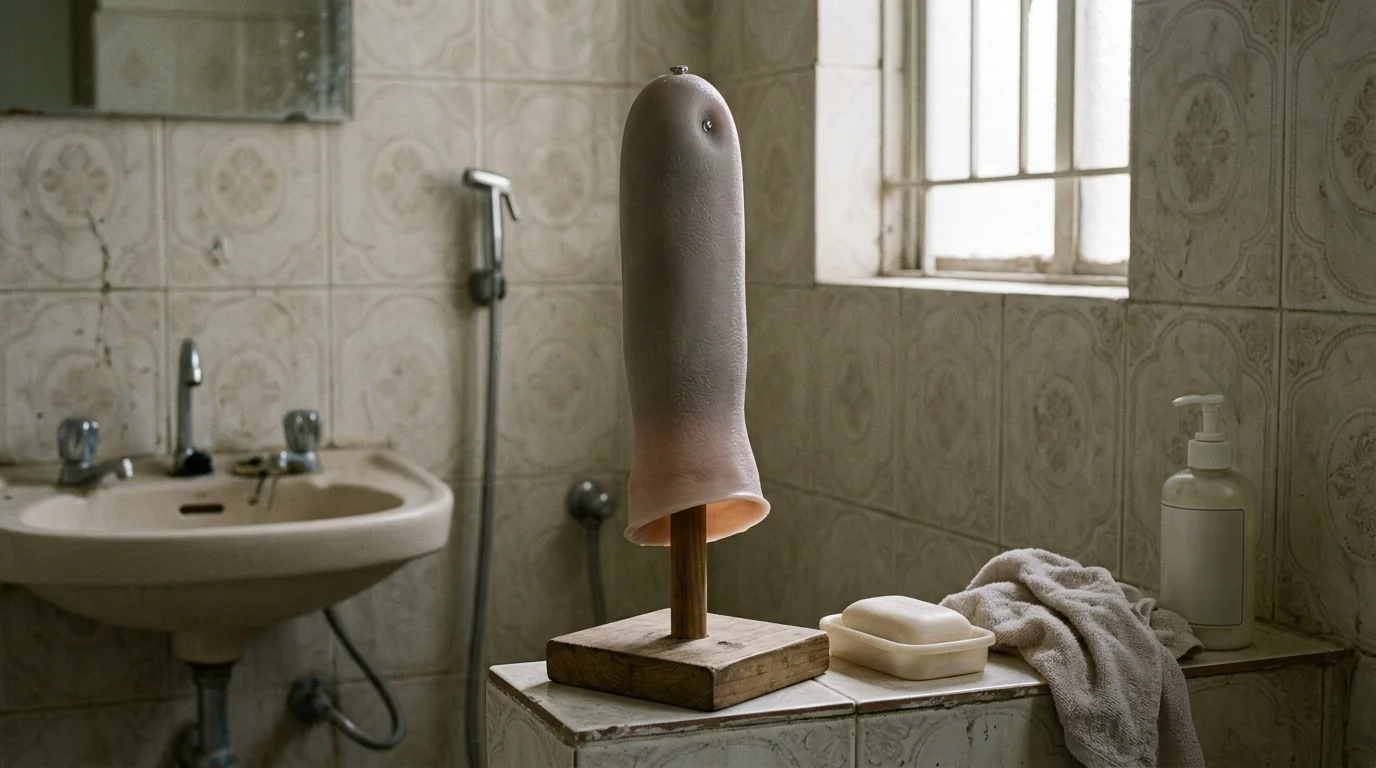
- Silicone liners grip the skin, reduce rubbing and last well. They are the most common choice.
- Gel liners are softer and kinder to thin, scarred or diabetic skin, and wear faster.
- Foam inserts and cotton or wool socks are the simplest system, cool and cheap, with more movement inside the socket.
Socks come in thicknesses called ply. As your stump shrinks you add ply to keep the fit snug. Keep a few spare socks with you, especially in the heat.
How the leg stays on
| Suspension | How it holds | Good for | Watch out for |
|---|---|---|---|
| Strap or cuff | A strap above the knee or round the waist | Simple, cheap, easy to repair | Rubbing and sweating in summer |
| Sleeve | A rubber or gel sleeve seals the socket to the thigh | Below knee, easy to use | Wears out, can feel hot |
| Pin lock | A pin on the liner clicks into the socket | Easy on and off, most users | Can pull on the end of the stump |
| Suction | Air is pushed out through a valve | Above knee, firm hold | Needs a steady stump size |
| Seal-in liner | Rings on the liner seal against the socket | Active users, little movement | Harder to put on |
| Vacuum | A pump keeps the socket pressure low | Most stable fit for very active users | Cost and maintenance |
Parts and care
From cast to final socket
- 1
Cast
Plaster bandage wrapped over the stump while we hold the shape we want, with marks over the bones.
- 2
Positive model
The cast is filled to make a model of your stump, which we shape by hand.
- 3
Clear test socket
Heated plastic pulled over the model. You stand and walk in it, and we mark changes.
- 4
Final socket
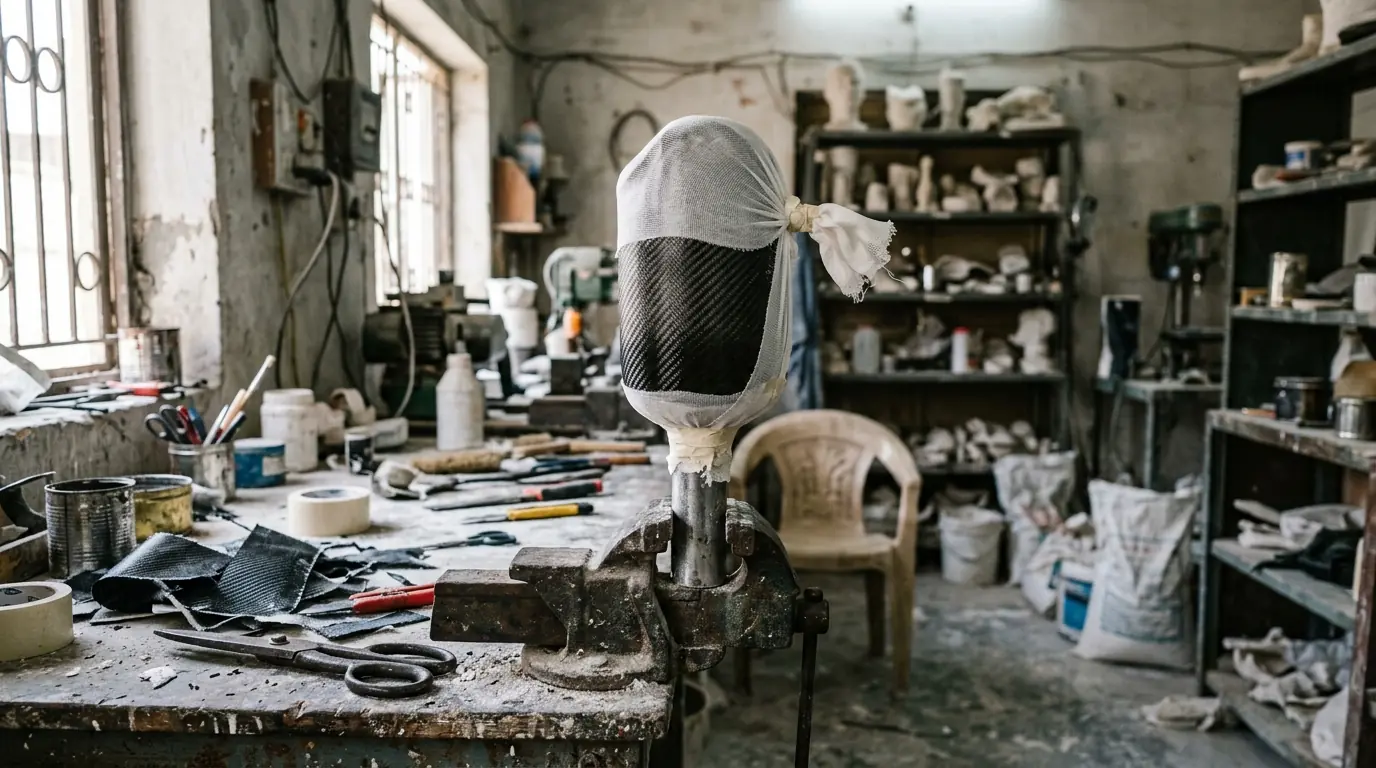
Laminated in resin with carbon or fibre layers, or made in thermoplastic, then trimmed and smoothed.
- 5
Fitting
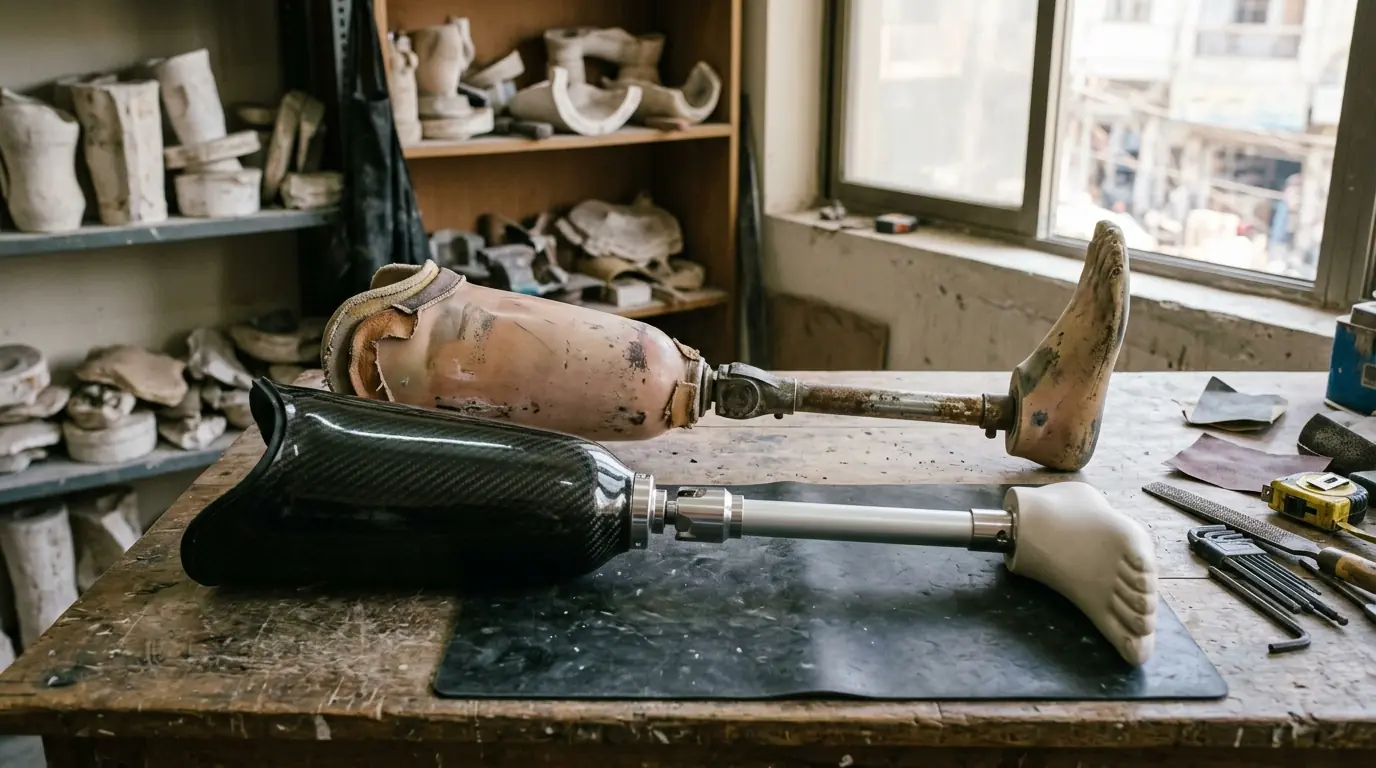
Pylon, knee and foot attached and aligned, then checked again after a few days of wearing.
Socket and liner questions
Why does my socket feel loose after a few months?
The stump shrinks, especially in the first year as swelling settles and muscles change. Adding a thin sock usually restores the fit. If you need more than about ten to fifteen ply of socks, the socket is too big and needs replacing.
What is a test socket?
A clear plastic socket made from your cast before the final one. You stand and walk in it, and because it is clear we can see exactly where the stump presses and where there are gaps, then correct the shape before the real socket is made.
Which liner is best in Karachi's heat?
There is no single best liner. Silicone liners are durable and grip well; gel liners are softer for thin or scarred skin. Both make you sweat in summer, so washing the liner daily, drying the skin and sometimes using a thin sock over the liner all help.
Can I get just a new socket and keep my old leg?
Usually yes. If the knee, pylon and foot are still in good condition, we make a new socket on a new cast and fit your existing parts to it. A new below-knee socket starts from Rs 40,000.
How do I clean my liner and socket?
Wash the liner every day with mild soap and water, rinse it well and let it dry inside out. Wipe the inside of the socket with a damp cloth. Never use alcohol or harsh cleaners on a silicone liner.
Read next
Not sure this is the right leg for you?
Send a photo of the stump and a line about your health on WhatsApp. We will tell you honestly what fits, and what it is likely to cost, before you travel or pay anything.