Prosthetic legs for older patients
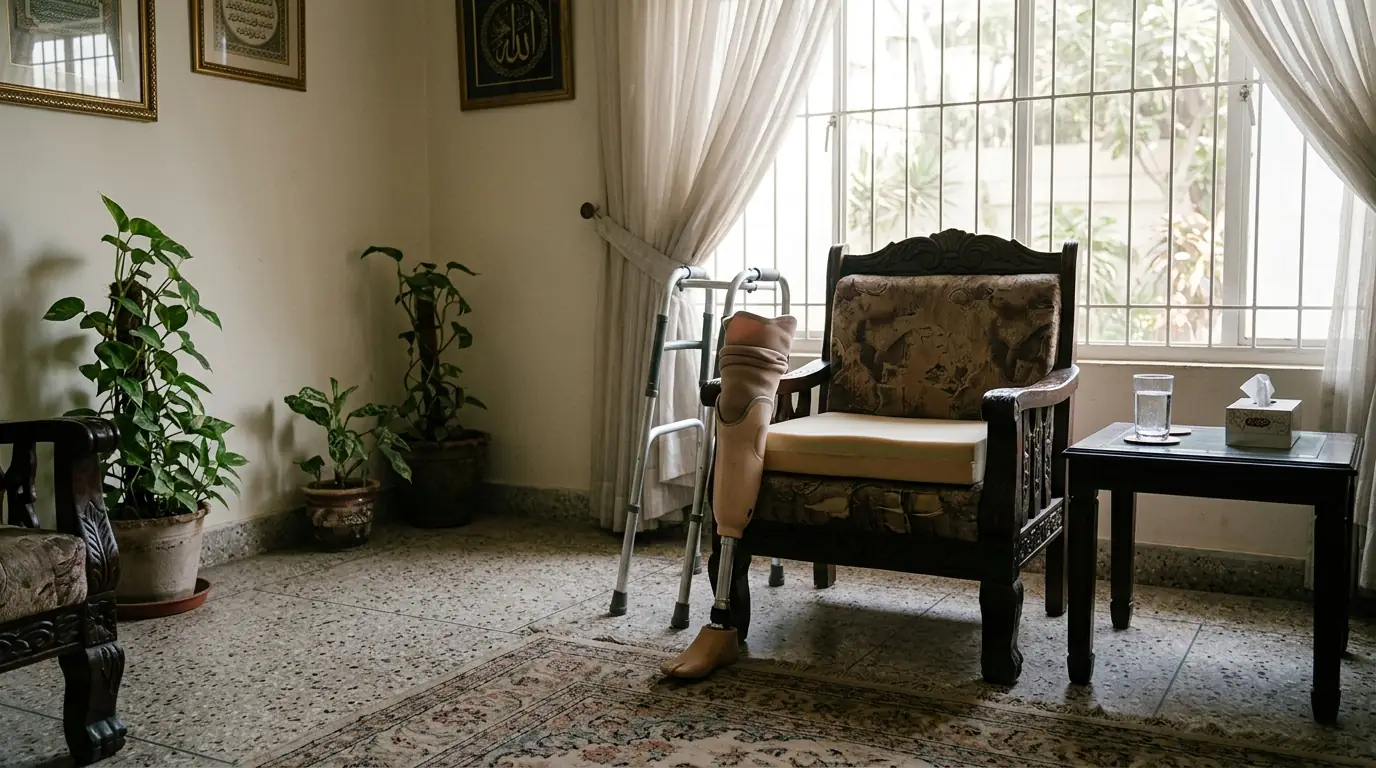
Age alone is not a reason to say no to a prosthetic leg, but strength, balance and heart health are. We check all three honestly, then build a light leg with a stable knee or foot, so the first goal of standing safely is met before anything else.
- Free first assessment
- Test socket before the final leg
- Call or WhatsApp 24/7
What we check before fitting an older patient
Walking on a prosthetic leg takes more energy than ordinary walking, and much more above the knee. For an older person that extra effort, together with diabetes, heart disease or weak muscles after weeks in bed, decides what is realistic. At the free assessment we look at:
- The other leg. Can it take your weight? Is the foot healthy, especially after diabetes?
- Balance. Can you stand with support for a minute? Sit up without help?
- Heart and breathing. Do you get breathless after a few steps or a short wheelchair push?
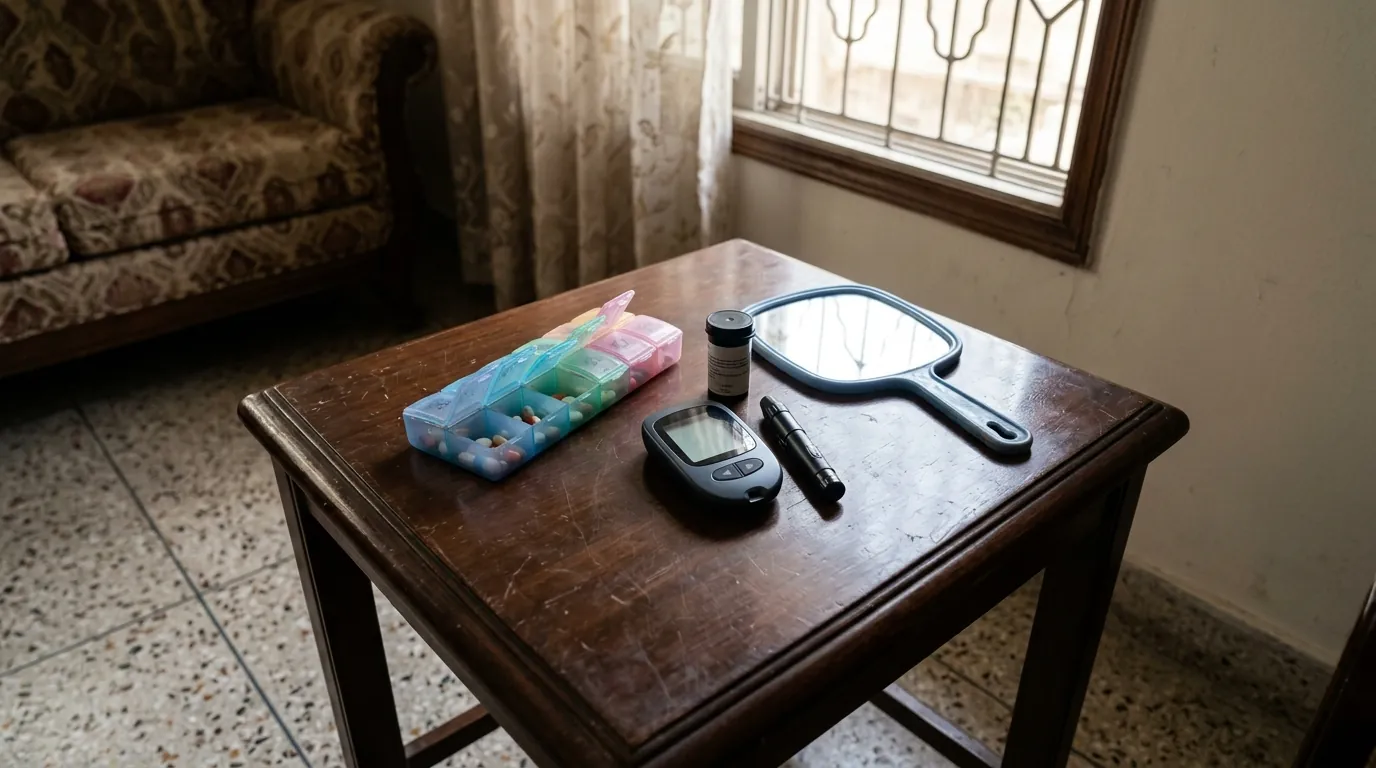
- Hands and eyesight. Can you put a liner on, press a button, check your skin?
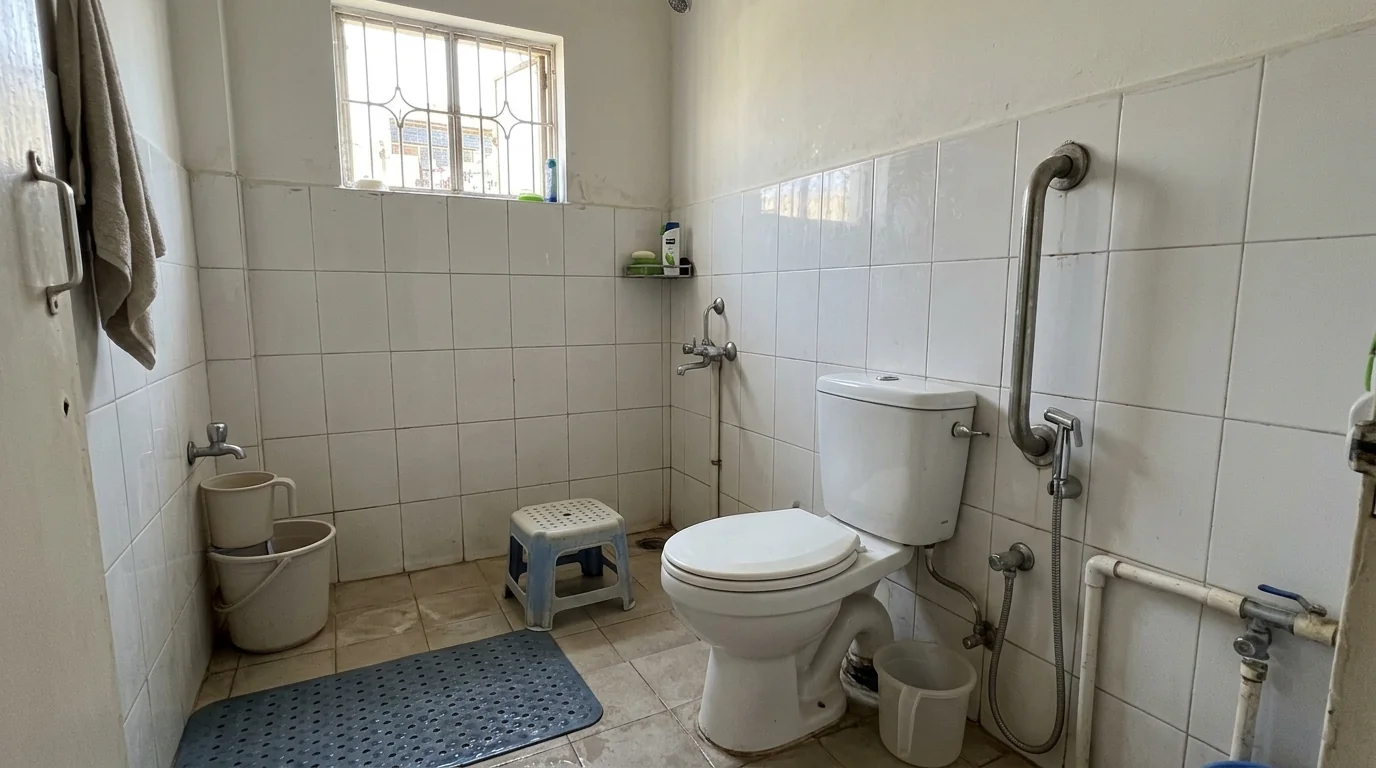
- Your home. Stairs, the bathroom, the bed height, and who is there to help.
From that we agree a goal with you and your family: safe standing and transfers, walking inside the house, or walking outside with a stick.
How we build a leg for an older patient
Light. Every gram is lifted with every step, so we choose lighter pylons and feet, and avoid heavy cosmetic covers unless you want one.
Stable. A foot that sits flat and steady, rather than a springy sports foot. For above-knee legs, a locking or very stable polycentric knee.
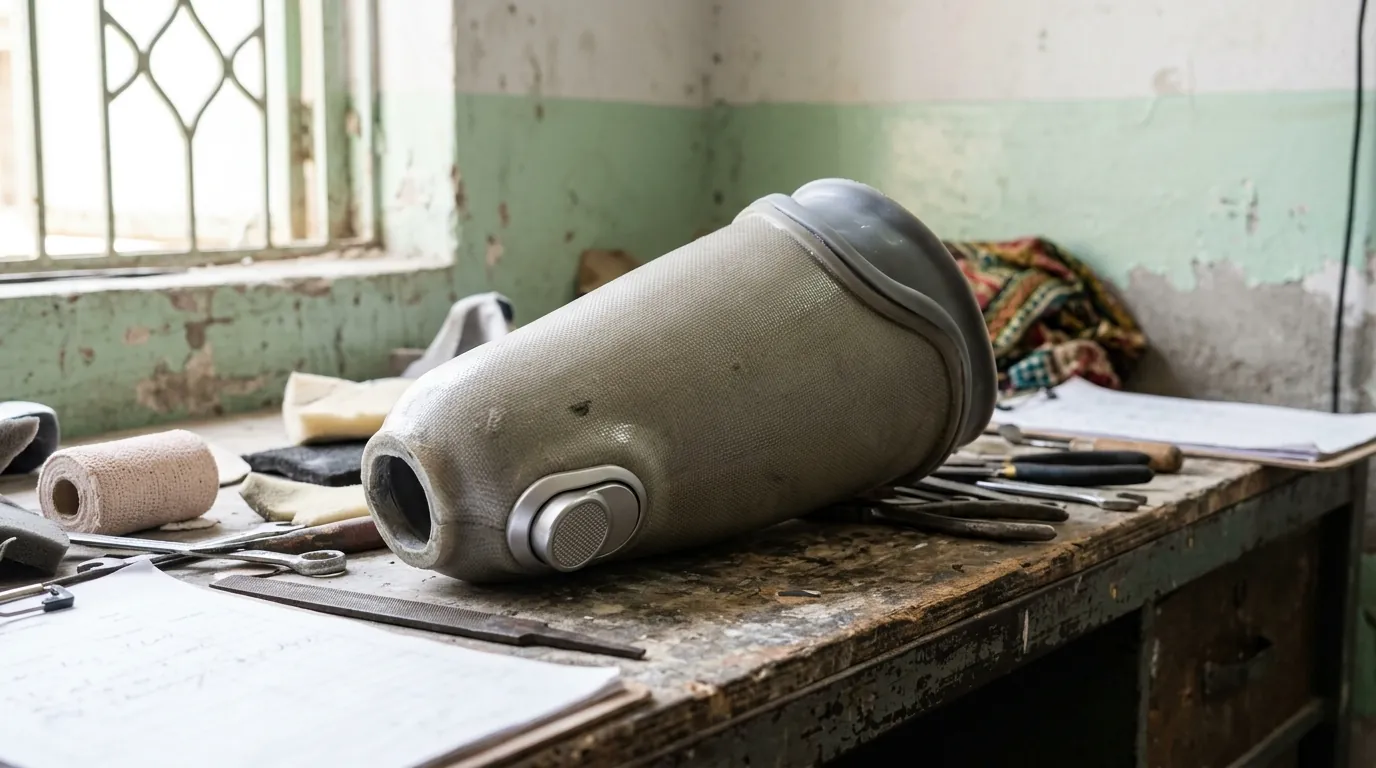
Easy to put on. A sleeve, or a pin liner with a large release button, so the leg can be put on in a chair without help, or with one helper.
Kind to the skin. Older skin is thinner and heals slowly. A soft gel liner and careful socket shaping protect it.
Price follows from those choices, not the other way round. Most older patients need an affordable or mid-range leg, not a premium one. See the price guide for the ranges.
Useful for families
Training for older patients
- 1
Standing and balance
Standing between the parallel bars with the leg on, shifting weight from side to side.
- 2
Sit to stand
Getting up from a chair and sitting down safely, many times, until it is easy.
- 3
Short walks
A few steps with a walking frame, then a little further each session.
- 4
At home
Transfers to the bed and toilet, the doorway, and the one or two steps that matter in your house.
- 5
Family training
A family member learns to help put the leg on and check the skin each night.

Questions families ask
Is my father too old for a prosthetic leg?
Not because of age alone. We fit people in their seventies and eighties. What matters is whether he can stand on the other leg with support, whether his heart and breathing allow short walks, and whether he wants to walk. We will tell you honestly after the assessment.
What is the safest leg for an older person?
A light below-knee leg with a stable foot, or for above-knee patients a locking knee that stays straight while walking. Easy suspension, such as a sleeve or a pin liner with a large button, matters more than an expensive foot.
Will a prosthetic leg help with the toilet and getting out of bed?
Often this is the biggest benefit. Even people who walk only inside the house find standing to transfer, using the bathroom and getting into a car much easier and safer with a leg.
What if walking turns out to be too hard?
Some older patients use the leg for standing and short distances indoors, and a wheelchair outside. That is a good result, not a failure. We discuss this before you spend money, so expectations are clear.
Read next
Ask us about your parent's leg
Send a photo of the stump, their age and a line about their health on WhatsApp. We will tell you honestly whether a leg is likely to help, and what kind.