Partial foot and Syme's prosthesis in Karachi
Losing toes or part of the foot changes how you push off with every step, even when the rest of the leg is fine. A well-made filler or a slim socket restores the shape of the foot, protects the skin that is left and keeps your shoe on.
- Free first assessment
- Test socket before the final leg
- Call or WhatsApp 24/7
Small amputations, big effect on walking
The front of the foot is the lever you push off with. When toes or the forefoot are lost, the step becomes shorter, the shoe bends in the wrong place and pressure moves onto skin that was never meant to carry it. After a diabetic amputation that extra pressure is the main reason new ulcers appear.
What you need depends on how much of the foot remains:
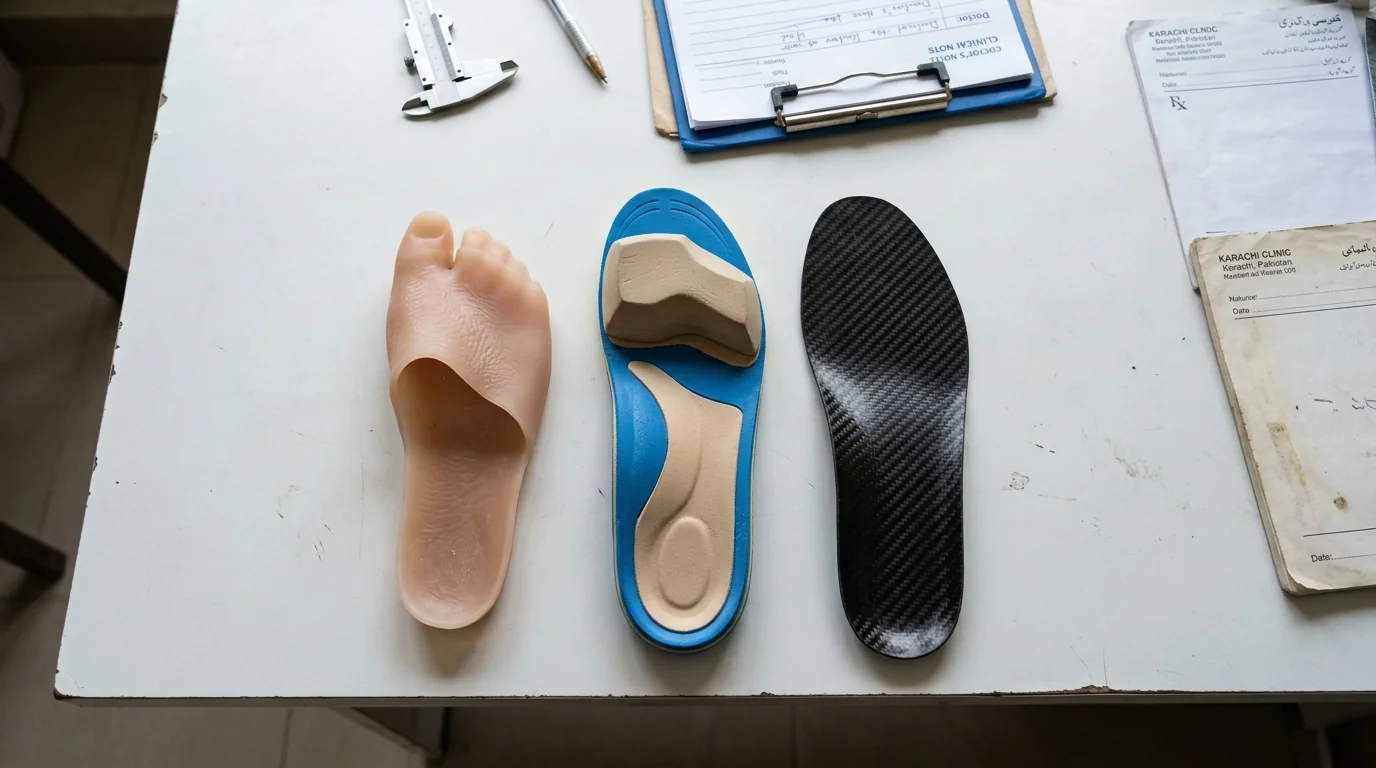
- Toe loss. A soft silicone or foam toe filler, sometimes built into an insole.
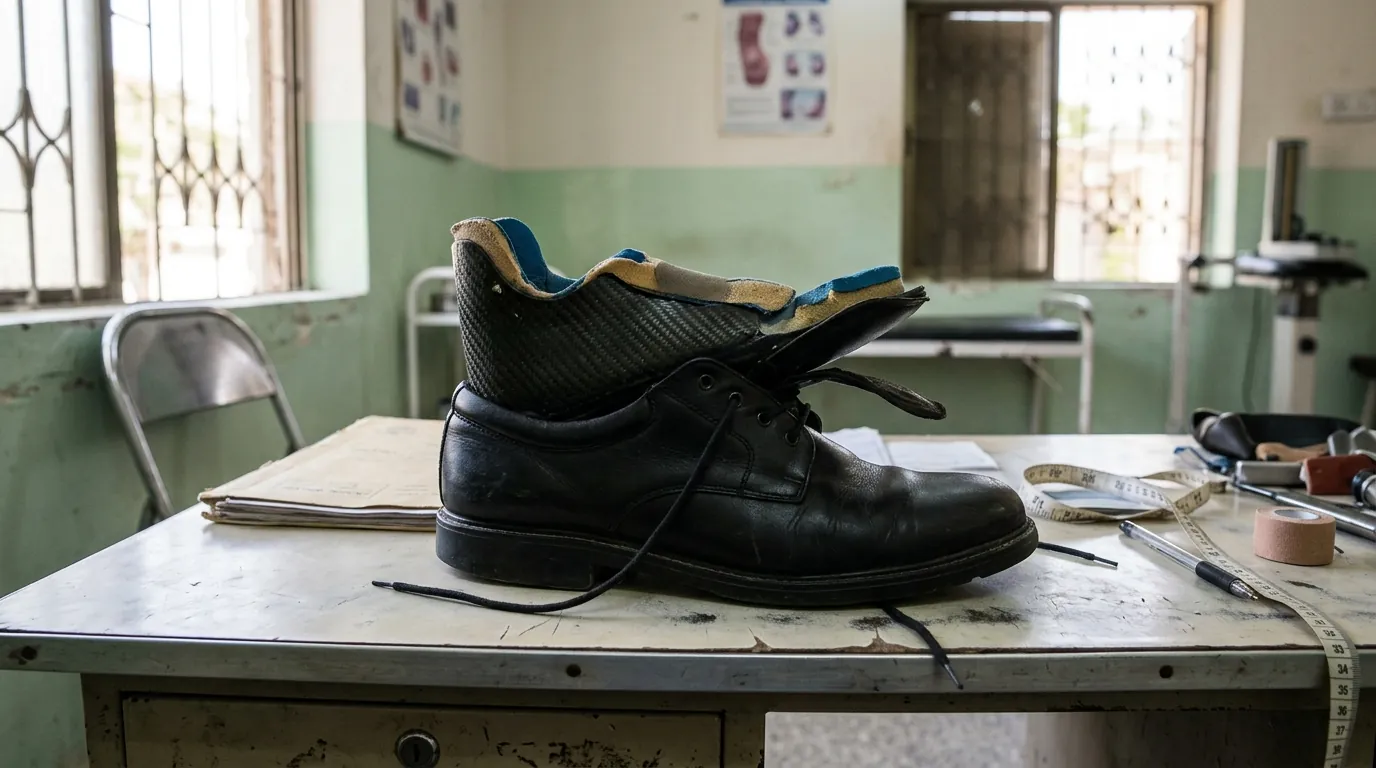
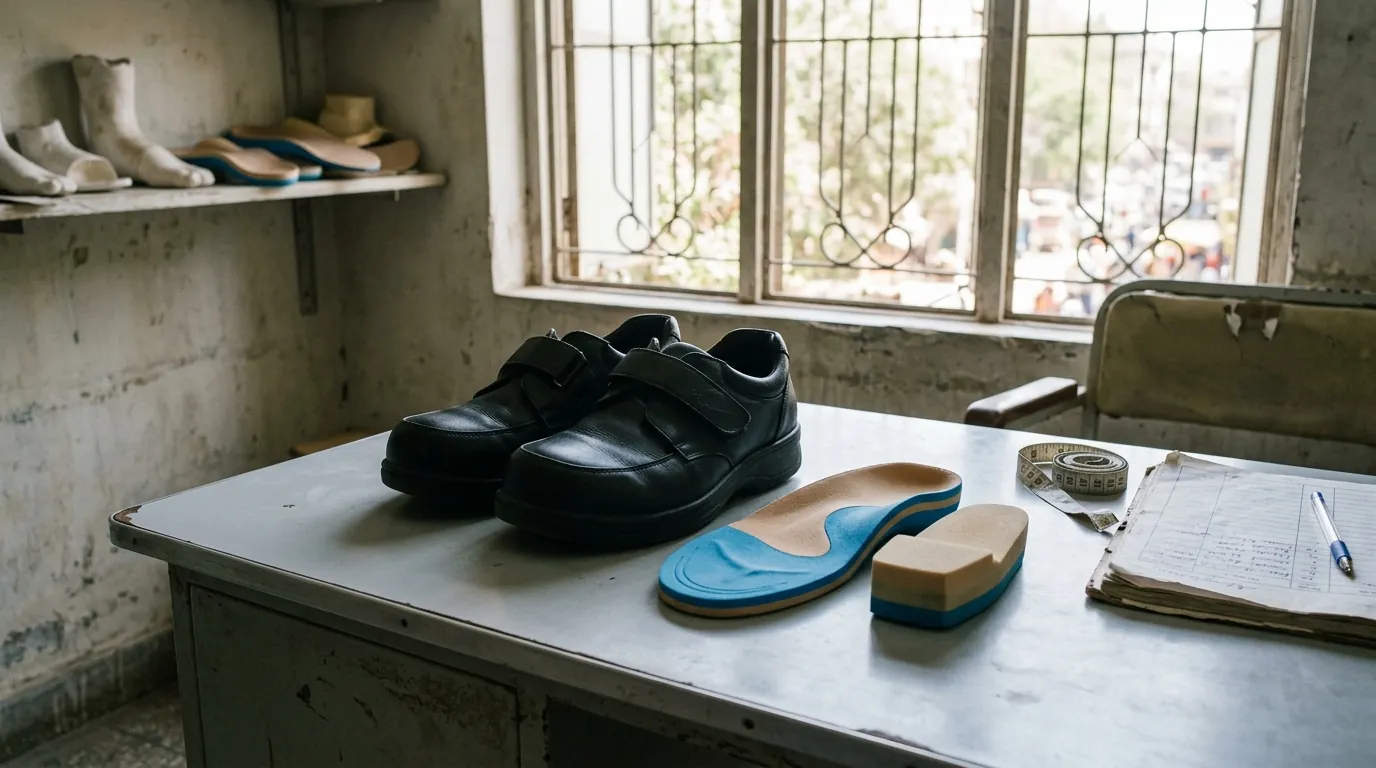
- Forefoot loss (transmetatarsal or Lisfranc). A filler on a moulded insole, often with a stiff carbon plate to replace the lever.
- Midfoot loss (Chopart). A slipper socket or an ankle-high socket, because the foot alone cannot control the shoe.
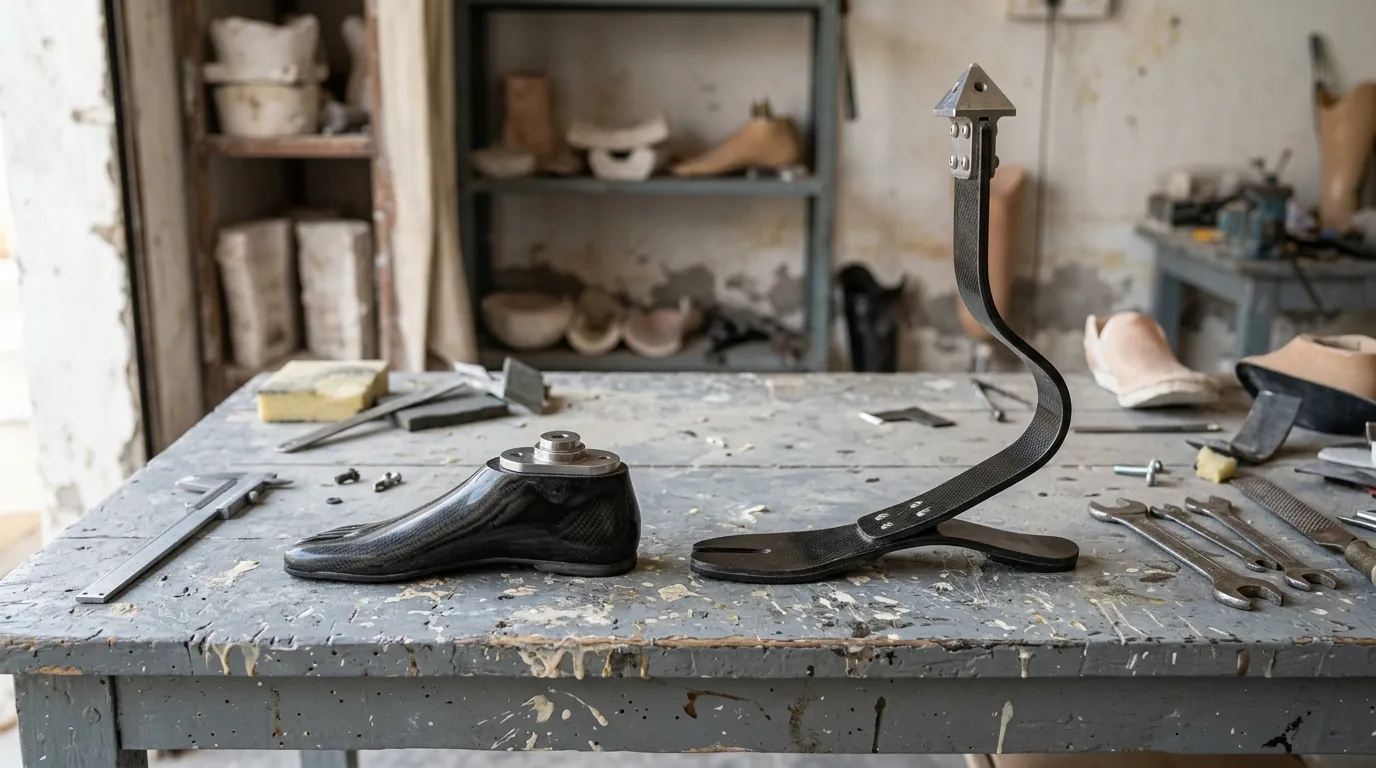
- Through the ankle (Syme's). A slim socket the length of the shin with a low-profile foot.
Prices
| Device | Range | What is usually inside |
|---|---|---|
| Toe or forefoot filler | Rs 10,000 to 40,000 | Silicone or foam filler, shaped for your shoe, insole if needed |
| Partial foot socket | Rs 40,000 to 120,000 | Slipper or ankle-high socket on your cast, carbon or flexible plate |
| Syme's ankle leg | Rs 110,000 to 400,000+ | Slim socket with a window or liner, low-profile foot |
Prices include fitting. Shoes are not included.
The Syme's leg
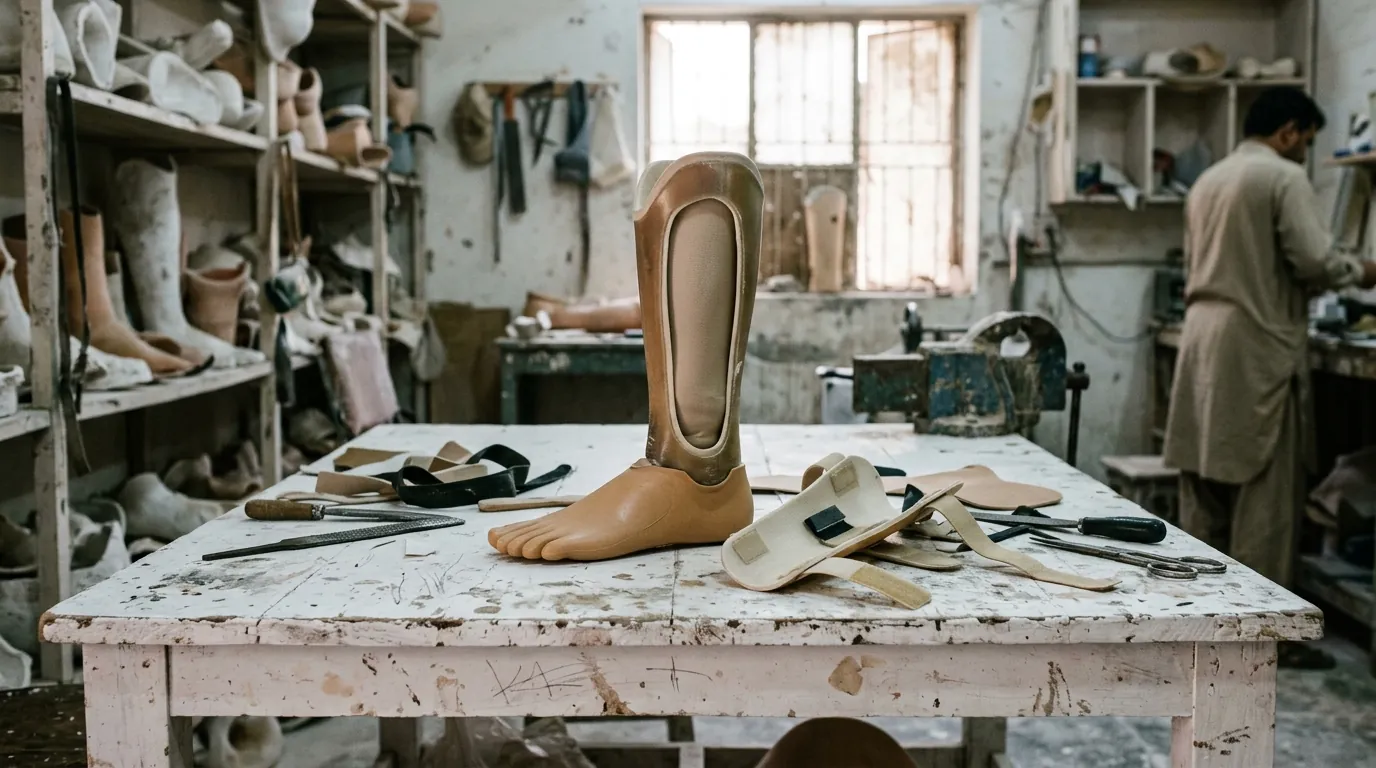
A Syme's amputation keeps the heel pad under the end of the shin. That pad can usually take weight, which is a real advantage. The difficulty is that the end of the leg is wider than the ankle above it, so a plain socket will not slide on. We use either a socket with a removable side window or a socket with a flexible inner liner that squeezes past the bulge and then holds the leg firmly.
There is very little space under the limb, so the foot has to be low-profile. That limits the choice of feet, but good low-profile carbon feet are available and we import them to order.
Related parts
How we fit a partial foot or Syme's device
- 1
Look at the foot and your shoes
We check the skin, any pressure marks and the shoes you actually wear.
- 2
Cast or impression
A foam impression for fillers, a plaster cast for sockets and Syme's legs.
- 3
Trial fitting
A trial in your shoe while you walk, to check the push-off and look for pressure.
- 4
Final device
The finished filler or socket, with a skin check after the first week of wearing it.
Partial foot and Syme's questions
Do I need a prosthesis after losing only one or two toes?
Often not after one small toe. After the big toe, or two or more toes, a simple filler in the shoe helps balance, stops the shoe folding and protects the skin. After a diabetic toe amputation it also lowers the risk of a new ulcer.
What is a Syme's amputation?
An amputation through the ankle joint that keeps the heel pad, so you can often stand on the end of the leg for short moments, such as at night. It needs a slim socket with a way to get past the wide end of the limb.
Can I wear normal shoes with a partial foot prosthesis?
Usually yes, often a closed shoe with laces or a strap rather than an open sandal. Some people go up half a size or choose a deeper shoe. Bring the shoes you wear most days to the first visit.
Is a partial foot prosthesis cheaper than a full leg?
Yes. Toe and forefoot fillers start from Rs 10,000. Partial foot sockets and Syme's legs cost more because they are made on a cast and need careful fitting around the ankle.
Read next
Not sure this is the right leg for you?
Send a photo of the stump and a line about your health on WhatsApp. We will tell you honestly what fits, and what it is likely to cost, before you travel or pay anything.