Above-knee prosthetic leg in Karachi
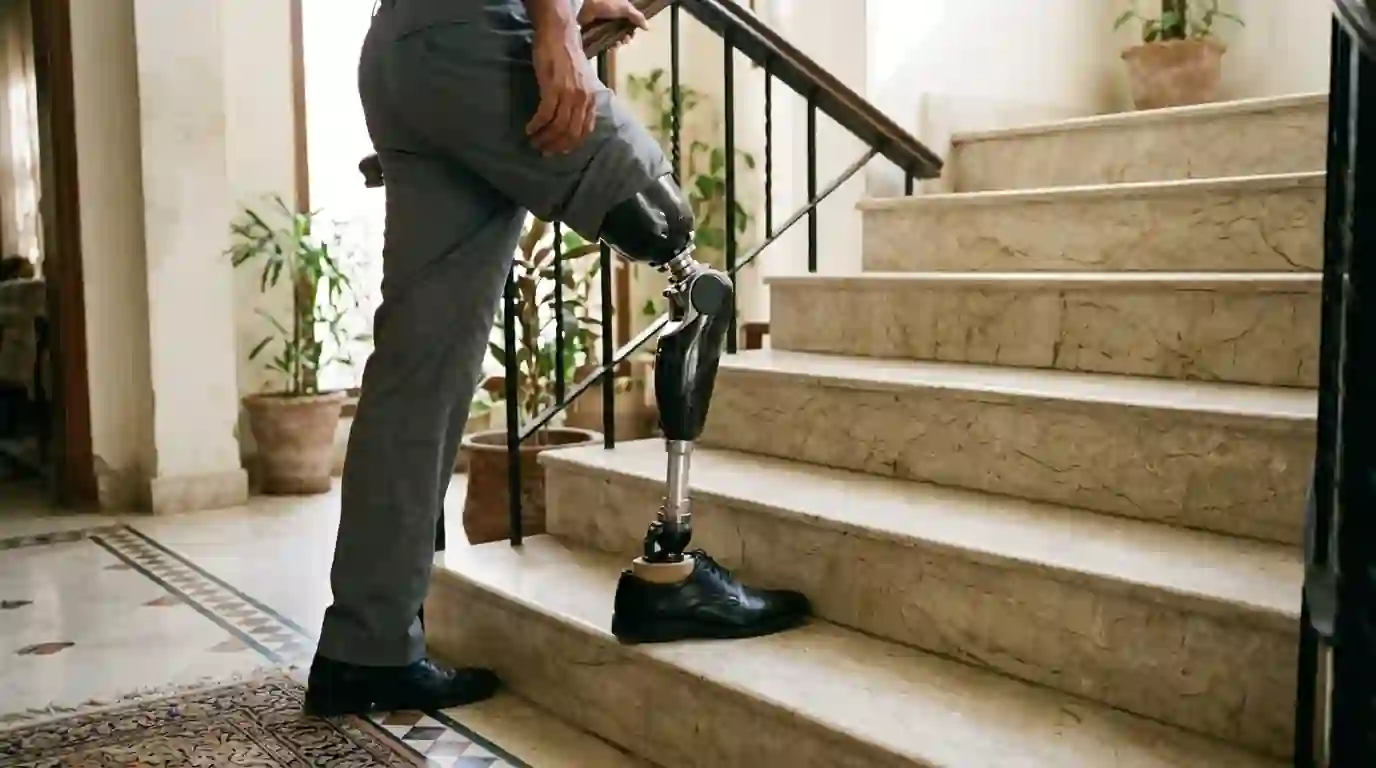
An above-knee leg has to do the work of a lost knee, so the socket and the knee joint matter more than anything else. We build the thigh socket on your own cast, choose a knee that is safe for how you walk today, and train you until each step feels steady.
- Free first assessment
- Test socket before the final leg
- Call or WhatsApp 24/7
What an above-knee leg is
An above-knee, or transfemoral, prosthesis is for an amputation through the thigh bone. It replaces the knee, the lower leg and the foot. Because the knee is gone, the leg has to bend when you swing it forward and stay straight and safe when you put weight on it. That job falls to the knee joint, and it is why above-knee legs cost more and take longer to learn than below-knee legs.
The parts are the thigh socket, a liner or suction system to hold it on, the knee joint, a pylon and a foot. The knee moves the price more than any other part, from a simple locking knee to hydraulic knees that cost several lakh rupees.

Above-knee leg prices
Complete leg with fitting and walking training. Microprocessor knees are quoted separately because their cost depends on the model.
| Price band | Range | What is usually inside | Suits |
|---|---|---|---|
| Affordable | Rs 150,000 to 300,000 | Thigh socket on your cast, locking or single-axis knee, locally made foot | Safe walking indoors and short distances |
| Mid range | Rs 300,000 to 700,000 | Polycentric or pneumatic knee, imported dynamic foot, liner or suction | Daily walking at a steady pace |
| Premium imported | Rs 700,000 to 2,500,000+ | Hydraulic knee, carbon foot, carbon socket with seal-in liner | Active users with good balance |
See every level compared in the price guide.
The knee joint: four kinds, and who each one suits
- Locking knee. Stays straight while you walk and unlocks with a lever when you sit. The safest choice for older or unsteady walkers. The walk is stiff-legged.
- Single-axis knee with friction. Simple and light, bends like a hinge. Needs good hip control to stay safe.
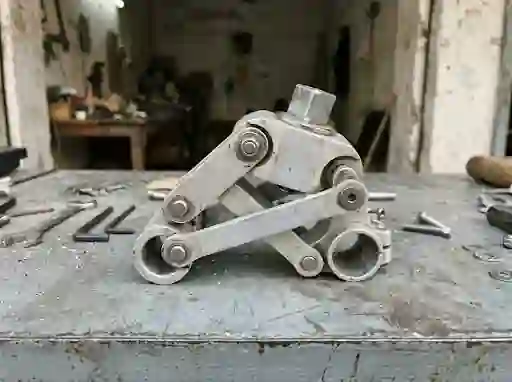
- Polycentric knee. Several pivots make it very stable when your heel touches down, and it folds neatly when you sit. A good all-round choice in Pakistan.
- Pneumatic or hydraulic knee. Air or oil controls the swing, so the leg keeps up when you walk faster. Worth it for people who walk long distances every day.
Microprocessor knees, with a small computer inside, adjust every step and can catch a stumble. They are excellent, but expensive to buy and to service here. We explain them honestly on the knee joints page.

Knees and sockets for above-knee legs

How we make your above-knee leg
- 1
Free assessment
We check the stump length, hip strength and movement, balance and your heart and breathing, then agree the knee and the price.
- 2
Cast and measurements
A cast of the thigh with careful marks around the sitting bone and groin, where the fit matters most.
- 3
Clear test socket
You stand in a clear socket. We watch for pressure and gaps, and check that it stays on as you step.
- 4
Knee set-up and alignment
The knee is set slightly behind your weight line so it stays straight when you stand, then tuned as you walk.
- 5
Training
Weeks of practice: standing balance, stepping between the bars, turning, stairs, getting up from a chair and from the floor.

What makes above-knee walking easier
- A straight hipAfter surgery the hip tends to stay bent. Lying on your front for a while each day keeps it straight and makes walking much easier.
- StaminaWalking with an above-knee leg uses a lot more energy. Short daily walks build it up.
- A stable knee to startBegin on a safe knee. You can move to a freer knee later, once your balance is good.
- Practice at homeTen or fifteen minutes of exercises every day helps more than one long session a week.
Above-knee leg questions
Which knee joint is best for an above-knee leg?
The safest one for how you walk now. A locking knee suits people who are unsteady or walk only short distances. A polycentric knee is stable and bends naturally when you sit. Hydraulic and microprocessor knees adapt to your speed, but they only pay off if you walk a lot and have good balance.
Can an older person walk with an above-knee leg?
Often yes, especially with a light leg and a stable or locking knee. Walking with a missing knee takes much more energy than walking normally, so heart and lung health matter. We are honest at the assessment if a wheelchair would serve you better for longer distances.
How long does it take to learn to walk with an above-knee leg?
Most people need six to twelve weeks of regular practice to walk safely, and longer to walk without a stick. The first sessions are between parallel bars. Practice at home every day makes the biggest difference.
Why does my above-knee socket feel tight at the top?
The top edge of the socket holds the leg in place and takes weight on the sitting bone. Some firmness there is normal. Pain in the groin, a pinch when you sit, or a red mark that lasts means the trim line needs changing.
Can I sit on the floor with an above-knee leg?
Sitting cross-legged is difficult with most above-knee legs. Many people take the leg off for floor sitting, or use a low stool. Some knees have a rotator that lets the lower leg turn, which helps when sitting and getting into a car.
Read next
Not sure this is the right leg for you?
Send a photo of the stump and a line about your health on WhatsApp. We will tell you honestly what fits, and what it is likely to cost, before you travel or pay anything.